SNEHA Programme Improves Child Nutrition in Mumbai's Malvani, Bhiwandi
SNEHA programme records significant improvements in child nutrition, immunisation and maternal health.
'%3E%3Crect%20width%3D'96'%20height%3D'96'%20fill%3D'%23B3261E'%2F%3E%3Ccircle%20cx%3D'30'%20cy%3D'24'%20r%3D'44'%20fill%3D'%23fff'%20opacity%3D'.12'%2F%3E%3Ccircle%20cx%3D'60'%20cy%3D'74'%20r%3D'40'%20fill%3D'%23000'%20opacity%3D'.10'%2F%3E%3C%2Fg%3E%3Cg%20fill%3D'%23fff'%3E%3Crect%20x%3D'29'%20y%3D'49'%20width%3D'8'%20height%3D'19'%20rx%3D'1'%2F%3E%3Crect%20x%3D'39'%20y%3D'40'%20width%3D'9'%20height%3D'28'%20rx%3D'1'%2F%3E%3Crect%20x%3D'50'%20y%3D'45'%20width%3D'8'%20height%3D'23'%20rx%3D'1'%2F%3E%3Crect%20x%3D'60'%20y%3D'53'%20width%3D'7'%20height%3D'15'%20rx%3D'1'%2F%3E%3Crect%20x%3D'41'%20y%3D'34'%20width%3D'5'%20height%3D'6'%2F%3E%3C%2Fg%3E%3C%2Fsvg%3E)
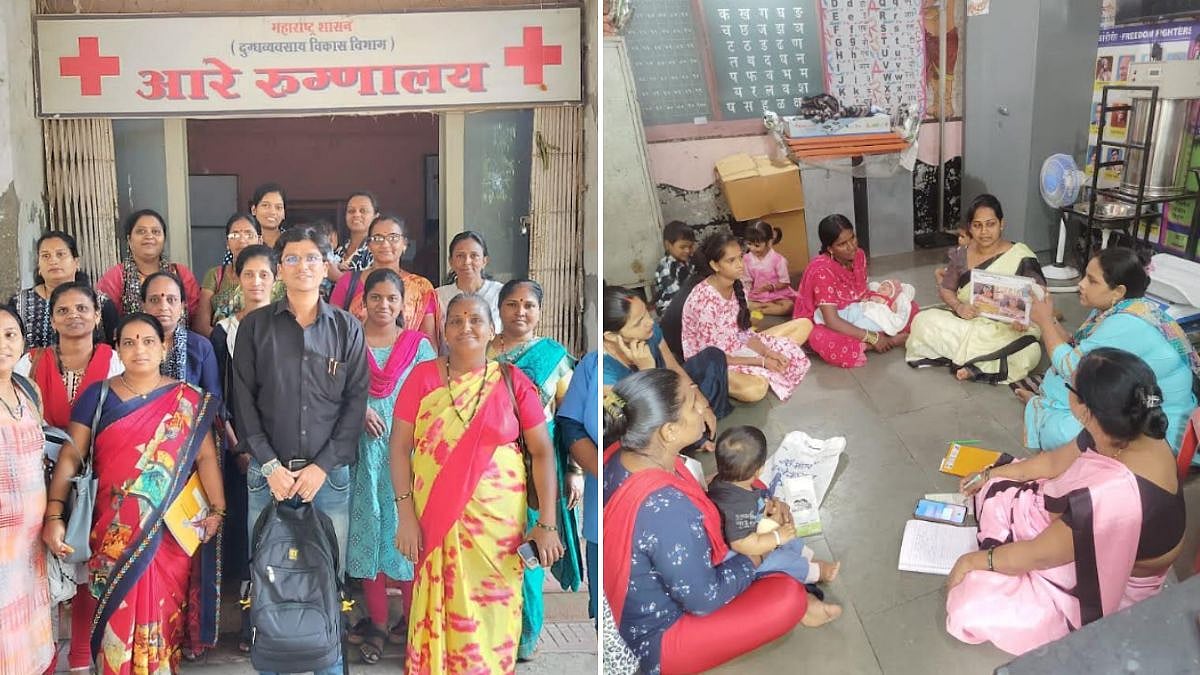
A community-led health and nutrition programme implemented by the Society for Nutrition, Education and Health Action (SNEHA) in Mumbai's Malvani and Bhiwandi has shown significant improvements in child nutrition, immunisation, and maternal health. The programme, which covers around 60,000 people across 11,000-14,000 families, has recorded a decline in stunting, wasting, and underweight cases among children.
The data, presented at SNEHA's Dissemination Event 2026, shows that stunting declined from 30% to 21% between 2021-22 and 2025-26, while wasting fell from 14% to 11%. Underweight cases also declined from 28% to 22%. Additionally, full immunisation increased from 79% to 93%, and developmental delay fell from 18% to 7%. Maternal anaemia declined from 40% to 17%, early pregnancy registration rose from 45% to 76%, and institutional deliveries increased from 88% to 97%.
The programme was implemented in vulnerable communities facing low education levels, small and overcrowded homes, income constraints, and closely spaced pregnancies. Instead of creating parallel systems, SNEHA worked through existing Anganwadi Centres and ICDS services, training community volunteers to work alongside government frontline workers. As the programmes matured, SNEHA shifted from direct intervention to a low-touch, community-led model, helping communities take greater ownership of health and nutrition services.
In these areas, stunting fell from 31% to 27%, wasting from 11% to 9%, and underweight from 28% to 25%. Full immunisation rose from 84% to 92%. SNEHA also reported improvements in Anganwadi services through its Adopt an Anganwadi/Saksham Anganwadi initiative. The proportion of mentored centres rated “Medium” or “High” increased from 13% to 53%, while those rated “Very Low” fell from 24% to 3%.
According to SNEHA, its partnership with municipal corporations also strengthened maternal referral systems. Formal referral linkages expanded from one corporation in 2007 to 10 by 2025, while referral tracking improved from 36% in 2014 to 84% in 2023. Vanessa D'Souza, CEO of SNEHA, said the focus was on ensuring that health gains continued beyond the period of direct intervention.
The programme's success is a significant step towards improving the health and nutrition of children and mothers in Mumbai's Malvani and Bhiwandi. The community-led approach and partnership with existing health systems have been key to the programme's success. As SNEHA continues to work towards improving health and nutrition services, its efforts are likely to have a lasting impact on the communities it serves.
The improvements in child nutrition, immunisation, and maternal health are a testament to the effectiveness of the programme. The decline in stunting, wasting, and underweight cases among children, as well as the increase in full immunisation and institutional deliveries, are all significant indicators of the programme's success. The programme's focus on vulnerable communities and its community-led approach have been instrumental in achieving these improvements.
In conclusion, the SNEHA programme has made significant strides in improving child nutrition, immunisation, and maternal health in Mumbai's Malvani and Bhiwandi. Its community-led approach and partnership with existing health systems have been key to its success, and its efforts are likely to have a lasting impact on the communities it serves.
The programme's success has significant implications for the health and nutrition of children and mothers in Mumbai. It highlights the importance of community-led initiatives and partnerships with existing health systems in improving health outcomes. As the programme continues to expand and mature, it is likely to have a positive impact on the health and nutrition of children and mothers in other parts of the city.
Overall, the SNEHA programme is a shining example of the impact that community-led initiatives can have on improving health and nutrition outcomes. Its success is a testament to the power of partnership and community-led approaches in achieving significant improvements in health and nutrition.
The programme's focus on vulnerable communities and its community-led approach have been instrumental in achieving significant improvements in child nutrition, immunisation, and maternal health. As the programme continues to work towards improving health and nutrition services, its efforts are likely to have a lasting impact on the communities it serves.
In the context of Mumbai's health and nutrition landscape, the SNEHA programme is a significant step towards improving the health and nutrition of children and mothers. The programme's success highlights the importance of community-led initiatives and partnerships with existing health systems in improving health outcomes. As the programme continues to expand and mature, it is likely to have a positive impact on the health and nutrition of children and mothers in other parts of the city.
The programme's impact is not limited to the communities it serves. It also has significant implications for the city's health and nutrition landscape as a whole. The programme's success highlights the importance of community-led initiatives and partnerships with existing health systems in improving health outcomes. As the programme continues to work towards improving health and nutrition services, its efforts are likely to have a lasting impact on the city's health and nutrition landscape.
In conclusion, the SNEHA programme is a significant step towards improving the health and nutrition of children and mothers in Mumbai's Malvani and Bhiwandi. Its community-led approach and partnership with existing health systems have been key to its success, and its efforts are likely to have a lasting impact on the communities it serves. The programme's success has significant implications for the health and nutrition of children and mothers in Mumbai, and it highlights the importance of community-led initiatives and partnerships with existing health systems in improving health outcomes.
The programme's success is a testament to the power of partnership and community-led approaches in achieving significant improvements in health and nutrition. As the programme continues to work towards improving health and nutrition services, its efforts are likely to have a lasting impact on the communities it serves. The programme's focus on vulnerable communities and its community-led approach have been instrumental in achieving significant improvements in child nutrition, immunisation, and maternal health.
In the context of Mumbai's health and nutrition landscape, the SNEHA programme is a shining example of the impact that community-led initiatives can have on improving health and nutrition outcomes. The programme's success highlights the importance of community-led initiatives and partnerships with existing health systems in improving health outcomes. As the programme continues to expand and mature, it is likely to have a positive impact on the health and nutrition of children and mothers in other parts of the city.
The programme's impact is not limited to the communities it serves. It also has significant implications for the city's health and nutrition landscape as a whole. The programme's success highlights the importance of community-led initiatives and partnerships with existing health systems in improving health outcomes. As the programme continues to work towards improving health and nutrition services, its efforts are likely to have a lasting impact on the city's health and nutrition landscape.
What it means for Mumbai is that the SNEHA programme has the potential to be a model for other community-led initiatives in the city. The programme's success in improving child nutrition, immunisation, and maternal health in Malvani and Bhiwandi could be replicated in other parts of the city, leading to significant improvements in health and nutrition outcomes for children and mothers across Mumbai.
Frequently asked questions
What is the SNEHA programme?
The SNEHA programme is a community-led health and nutrition programme implemented by the Society for Nutrition, Education and Health Action (SNEHA) in Mumbai's Malvani and Bhiwandi.
What are the key findings of the SNEHA programme?
The programme has recorded significant improvements in child nutrition, immunisation, and maternal health, including a decline in stunting, wasting, and underweight cases among children, and an increase in full immunisation and institutional deliveries.