India Office Leasing Dips 2% in H1 2026
Office leasing slows, demand decreases. What's behind the dip?

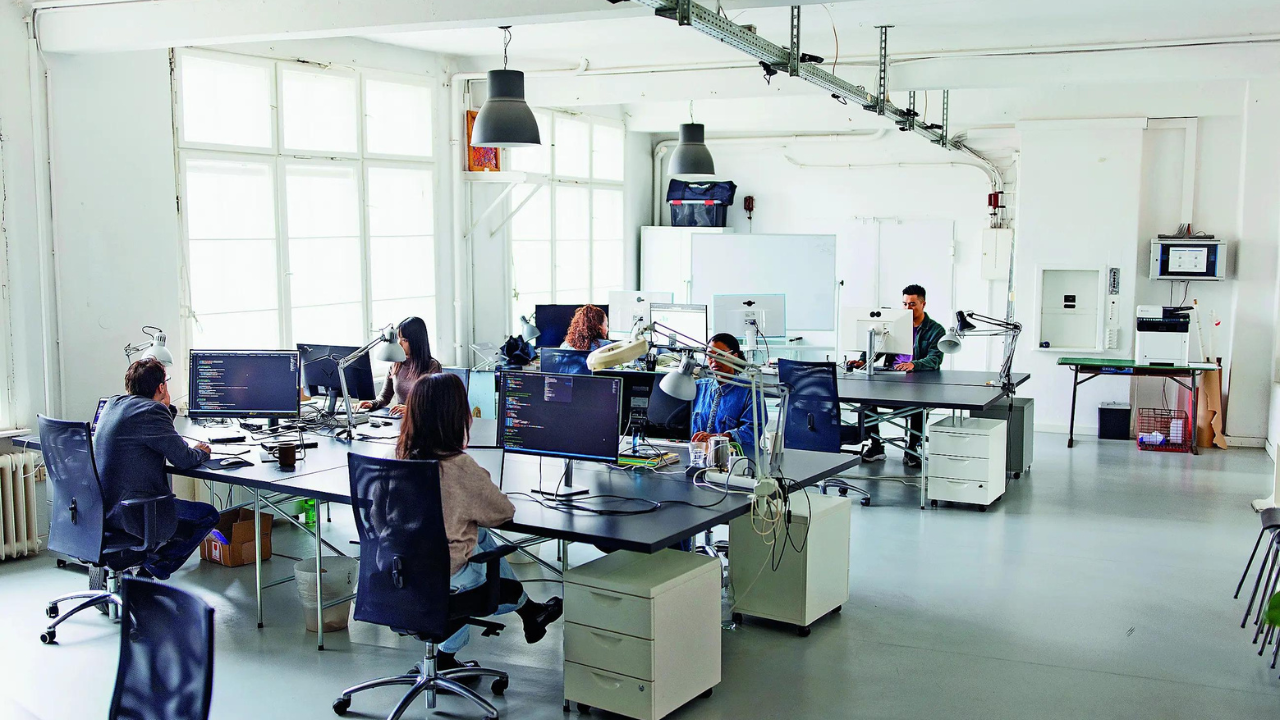
India's office market has experienced a pause after a record run, with leasing dipping 2% in the first half of 2026. This slowdown comes after a period of significant growth, with many businesses expanding their operations and taking up new office space.
The 2% decline in leasing is a notable shift, as the Indian office market had previously been characterized by high demand and rapid expansion. Several factors are contributing to this slowdown, including a decrease in demand from major corporations and a rise in vacancy rates in certain areas.
According to experts, the dip in leasing can be attributed to a combination of factors, including global economic uncertainty and a decrease in business expansion plans. Additionally, the rise of remote work and hybrid office models has also led to a decrease in demand for traditional office space.
The Indian office market had previously been driven by strong demand from the IT and ITES sectors, as well as from e-commerce and fintech companies. However, with the current economic uncertainty, many of these companies are adopting a wait-and-see approach, leading to a decrease in leasing activity.
Despite the slowdown, experts remain optimistic about the long-term prospects of the Indian office market. They point to the country's strong economic fundamentals, including a large and growing workforce, and a rapidly expanding middle class.
The slowdown in leasing is also expected to lead to a decrease in rental prices, making office space more affordable for businesses. This could lead to an increase in demand from smaller companies and startups, which could help to drive growth in the market.
In terms of specific locations, cities such as Bengaluru, Hyderabad, and Pune are expected to continue to drive growth in the office market, due to their strong IT and ITES sectors. Mumbai, on the other hand, is expected to experience a slower pace of growth, due to high rental prices and a decrease in demand from major corporations.
Overall, while the slowdown in India's office market may be a cause for concern, experts remain optimistic about the long-term prospects of the market. With its strong economic fundamentals and rapidly expanding workforce, India is well-positioned to continue to drive growth in the office market.
The current slowdown is likely to be a temporary pause, as the market adjusts to changing economic conditions. As the economy continues to grow and evolve, the Indian office market is expected to rebound, driven by demand from a range of sectors, including IT, ITES, and e-commerce.
In conclusion, the dip in office leasing in India is a notable shift, but it is not a cause for alarm. With its strong economic fundamentals and rapidly expanding workforce, India is well-positioned to continue to drive growth in the office market. As the market adjusts to changing economic conditions, it is likely to rebound, driven by demand from a range of sectors.
What it means for Mumbai and India is that the office market is undergoing a period of adjustment, driven by changing economic conditions. While the slowdown may be a cause for concern, it is also an opportunity for businesses to take advantage of more affordable office space, and for the market to evolve and grow in new and innovative ways.