
Awadhi & Lucknowi Cuisine in Mumbai: Galouti & Biryani
Where to eat authentic Awadhi & Lucknowi food in Mumbai: melt-in-mouth galouti kebab, dum biryani, nihari and sheermal, from ITC Maratha to Tunday.
'%3E%3Crect%20width%3D'96'%20height%3D'96'%20fill%3D'%23B3261E'%2F%3E%3Ccircle%20cx%3D'30'%20cy%3D'24'%20r%3D'44'%20fill%3D'%23fff'%20opacity%3D'.12'%2F%3E%3Ccircle%20cx%3D'60'%20cy%3D'74'%20r%3D'40'%20fill%3D'%23000'%20opacity%3D'.10'%2F%3E%3C%2Fg%3E%3Cg%20fill%3D'%23fff'%3E%3Crect%20x%3D'29'%20y%3D'49'%20width%3D'8'%20height%3D'19'%20rx%3D'1'%2F%3E%3Crect%20x%3D'39'%20y%3D'40'%20width%3D'9'%20height%3D'28'%20rx%3D'1'%2F%3E%3Crect%20x%3D'50'%20y%3D'45'%20width%3D'8'%20height%3D'23'%20rx%3D'1'%2F%3E%3Crect%20x%3D'60'%20y%3D'53'%20width%3D'7'%20height%3D'15'%20rx%3D'1'%2F%3E%3Crect%20x%3D'41'%20y%3D'34'%20width%3D'5'%20height%3D'6'%2F%3E%3C%2Fg%3E%3C%2Fsvg%3E)
The Top 10
- 01
Dum Pukht, ITC Maratha
Andheri East ~₹6,000+ for two (approx, fine dining)Go for: The city's benchmark for royal Awadhi dum cooking - slow-sealed dum biryani, kakori kebab and Dal Dum Pukht
Reserve ahead and dress smart; this is a formal five-star fine-dining experience, best for a special occasion
- 02
Kebabs & Kurries, ITC Grand Central
Parel ~₹4,500-5,500 for two (approx)Go for: Awadhi + North-West Frontier legacy - galouti and kakori kebabs, Koh-e-Awadh, Dal Bukhara
Book a table; premium pricing, so come hungry and let the kebab platter anchor the meal
- 03
Nawab Saheb, The Westin Mumbai Powai Lake
Powai ~₹4,000-5,000 for two (approx)Go for: Dedicated Awadhi restaurant famed for galawat ke kebab and Lucknawi gosht dum biryani
Dinner-only, so plan an evening; pair the melt-in-mouth kebabs with the dum biryani
- 04
Waarsa
Nariman Point (NCPA) ~₹2,500-3,500 for two (approx)Go for: Modern dedicated Awadhi menu - 30+ kebab varieties, Raan-e-Mukhtar, Zafrani Lagaan Murgh, plus strong veg Awadhi
Unusually large vegetarian Awadhi selection, so it works well for mixed veg/non-veg groups
- 05
Taftoon Bar & Kitchen
Bandra Kurla Complex (BKC) ~₹2,000-2,800 for two (approx)Go for: GT Road/Lucknowi spread; the mahi-tawa mutton galauti kebab is the standout
Portions run small for the price - order the galauti and share the breads
- 06
Kakori House
Mahim (also Andheri West / multiple outlets) ~₹500-800 for two (approx)Go for: Beloved neighbourhood Awadhi specialist - mutton galouti and kakori kebabs, kebab rolls with wheat roomali roti
Tiny and takeaway-focused, so it's best for delivery or grabbing rolls to go
- 07
Oudhe Premium Dining
Versova, Andheri West ~₹1,000-1,500 for two (approx)Go for: Dedicated Oudhi (Awadhi) menu - kakori, galawati and shammi kebabs
No alcohol served and open late; good for a relaxed family Awadhi dinner
- 08
Art of Dum
Lower Parel (Kamala Mills) ~₹1,200-1,800 for two (approx, delivery)Go for: Premium Lucknowi dum-pukht delivery kitchen - slow-cooked biryanis, galouti kebabs and curries in handis
Delivery-only, so order in for an at-home feast and allow time for the slow-cooked dishes
- 09
Kebab Gunj
Colaba (behind Radio Club) ~₹500-700 for two (approx)Go for: Casual Lucknowi/Delhi-style spot - galouti kebabs, murgh malai tikka and dum biryani
Mostly takeaway with a little seating; great value - order the galouti as your starter
- 10
Lucknowee Tunday Kebab
Andheri West (4 Bungalows) / Jogeshwari ~₹500-800 for two (approx)Go for: Tunday-style melt-in-mouth galouti kebabs and Lucknawi biryani
Runs across a couple of outlets - confirm the specific branch is open before heading over
Ranked by our Mumbai desk · prices are approximate — confirm before you go.
TL;DR: Awadhi (Lucknowi) food in Mumbai is the quieter, more refined cousin of the city’s Mughlai kebab scene — melt-on-the-tongue galouti kebab, gently spiced dum biryani, slow-cooked nihari and saffron sheermal. Head to Dum Pukht at ITC Maratha (Andheri East) for the full nawabi treatment, Neel at Mahalaxmi for a plush sit-down, and Lucknowee Tunday Kebab in the western suburbs for the real, unshowy article at a fraction of the price.
Most Mumbaikars lump every kebab into one glorious, smoky category, and honestly, on a Mohammed Ali Road night in Ramzan, who’s counting. But there is a real distinction worth knowing, and once you taste it you can’t un-taste it. The seekh-and-tandoor food of Mohammed Ali Road is broadly Mughlai — bold, charcoal-forward, built for eating on your feet. Awadhi cuisine, born in the royal kitchens of Lucknow, is a different animal: slower, softer, more perfumed. It’s the food of nawabs and their obsessively patient rakabdars (court cooks), people who would spend a full day coaxing one pot of biryani toward perfection. Mumbai has only a small circle of places doing it properly, but the ones that do are worth planning an evening around.
This is a guide to eating that food across the city — what to order, where the cooking is genuinely Lucknowi rather than Mughlai in disguise, and how to build a night around it without overspending or overeating. A note on money before we start: all prices here are rough per-person bands, and they drift with the season, the day of the week and how heavily you order. Treat them as a compass, not a contract.
At a glance: where to eat Awadhi in Mumbai
| Place | Area | Best for | Rough per head |
|---|---|---|---|
| Dum Pukht, ITC Maratha | Andheri East | Full fine-dining nawabi experience | Four figures (splurge) |
| Neel, Tote on the Turf | Mahalaxmi | Plush date-night sit-down | Upmarket |
| Lucknowee Tunday Kebab | Andheri West / Jogeshwari | The real galouti, no frills | ₹300–₹600 |
| Khyber | Fort | Grand South Mumbai crossover | Mid–high |
| Café Noorani | Mumbai Central | Casual kebabs & biryani | Budget |
Read the table top to bottom and you have the shape of a plan: one splurge, one romantic evening, and two or three casual outings that cost less than a cinema ticket with popcorn. Most people find their sweet spot somewhere in the middle of that list.
What makes it Awadhi (and not just Mughlai)
The dividing line is technique and restraint. Awadhi cooking gave the world dum pukht — “breath cooking” — where a pot is sealed shut with a rope of wheat-flour dough and left over the faintest fire so the steam can never escape. Nothing gets browned aggressively; everything is coaxed. The result is food that tastes of aroma more than heat, of patience more than punch.
- Spicing is gentler. Where Mughlai food leans on cream and big charcoal flavour, Awadhi gravies build their body from yoghurt, saffron and ground dried-fruit pastes. Garam masala tends to be a finishing whisper stirred in at the end, not the loud base note it is in a Punjabi-style curry.
- Texture is the whole point. The famous galouti kebab is minced mutton pounded to a near-paste with raw-papaya tenderiser and a spice blend a Lucknow family will guard for generations, then cooked so soft it collapses on the tongue. The much-repeated story is that it was invented for a toothless nawab who wanted his kebabs but had lost the teeth to chew them.
- Bread and rice are elevated. Sheermal — a mildly sweet, saffron-and-ghee milk bread — and long-grain dum biryani are treated as stars in their own right, not the fillers you push to the edge of the plate.
Here’s the quick field test. If a menu is all tandoori tikka and fiery red gravies, you’re in Mughlai-leaning territory. If it whispers galouti, kakori, nihari and sheermal, and the biryani is described as fragrant rather than fiery, you’re eating Awadhi. Neither is “better” — they’re different pleasures — but knowing which one you’ve walked into stops you ordering the wrong thing and blaming the kitchen.
The dishes to order
You could over-think this, but you don’t need to. A first-timer’s spread is really just a couple of kebabs, a bread, one biryani and something sweet to finish. Build from there.
The kebabs
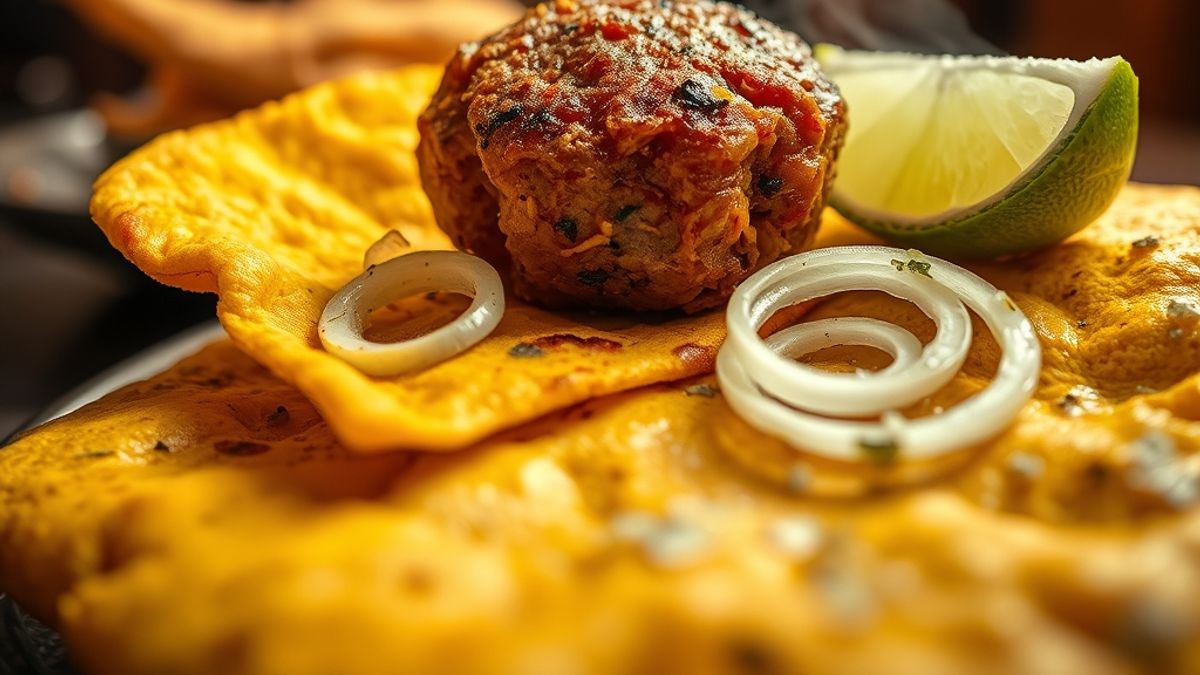
Galouti kebab is the signature and the single dish that tells you whether a kitchen is serious. Silky, almost spreadable mutton patties, ideally eaten folded into a warm ulta-tawa paratha — the thin, layered griddle bread made specifically to carry them. If the galouti holds its shape like a firm patty and needs real chewing, the kitchen has taken a shortcut somewhere.
Kakori kebab is the more delicate skewer cousin: mince ground extraordinarily fine, bound and grilled gently so it’s smooth rather than the coarse, muscular seekh you get on the street. Order both if you’re with company and want to taste the difference side by side.
Rice, bread and the slow-cooked stew
Dum (Awadhi) biryani is subtler than the Hyderabadi version most Mumbaikars know best. The meat and rice are layered and sealed together so the whole pot perfumes itself; the flavour arrives fragrant, not fiery. Look for restraint, not fireworks — and don’t be surprised if it’s paler and less oily than you expect.
Nihari, or nalli nihari, is a slow-cooked mutton-and-marrow stew, traditionally a winter and early-morning dish eaten with khameeri roti. In Mumbai it’s genuinely seasonal on many menus, so if you spot a good one in the cooler months, take it.
Sheermal is the bread to order for mopping. Its saffron-milk sweetness is a small revelation against a rich korma, and it’s the kind of thing you’ll find yourself ordering a second round of.
The finish
Close with shahi tukda — fried bread soaked in saffron-cardamom cream, rich enough to share — or firni, the chilled ground-rice pudding served in little earthenware bowls. Either is the correct full stop to an Awadhi meal. A kulfi works too, especially at the casual spots.
Fine dining: Dum Pukht at ITC Maratha
If you want the full nawabi treatment, Dum Pukht at ITC Maratha (Andheri East) is Mumbai’s most complete Awadhi experience. The restaurant is built around the dum-pukht technique itself — dishes arrive sealed under dough-topped handis, cracked open at the table so the trapped steam rises in front of you — and the kitchen is known for its slow-cooked biryanis, kakori kebabs, rich nihari gosht and warm sheermal. It’s a special-occasion room, and the prices match the ceremony: expect a proper meal for two to run well into four figures per head once you’ve added a starter, a biryani and dessert.
This is not a place to squeeze in between errands. Reserve ahead, dress up a little, and go slow — the whole point of the cuisine is that nobody hurried it, so you shouldn’t hurry either. Sunday brunch-lunch crowds and weekend evenings fill fastest.
Getting there: ITC Maratha sits near the domestic airport in Andheri East. The Metro around Marol Naka / Airport Road, plus a short cab hop, is your easiest route; if you’re coming from the western suburbs the airport road can crawl at peak hours, so leave a buffer.
Plush sit-down: Neel at Mahalaxmi
Neel, at Tote on the Turf (Mahalaxmi Race Course), is the other name that comes up again and again for refined Awadhi and North-West Frontier cooking. It leans on galouti and kakori kebabs and dum specialities, served in a handsome, greenery-flanked setting inside the racecourse grounds — one of the more atmospheric places to eat in central Mumbai, and a world away from the traffic outside. Budget generously; this is an upmarket evening rather than a casual bite.
It works especially well for a date or a small celebration, precisely because the room does half the work for you. Book a table for after sunset if you can, and keep the ordering disciplined — the kebabs and one shared biryani go further than three heavy mains.
Getting there: Mahalaxmi station on the Western line is close, with a short auto or cab ride to the racecourse gate. On a clear evening it pairs naturally with a walk along the nearby seafront before or after.
The honest, no-frills option: Lucknowee Tunday Kebab
For the real thing without the white tablecloths, Lucknowee Tunday Kebab — with outlets around Andheri West and Jogeshwari — is the one to know, and for a lot of people it’s the most satisfying entry on this whole list. It carries the Tunday name that is synonymous with Lucknow’s galouti tradition, an original Lucknow institution that dates back well over a century. Come here for the galouti, biryani, sheermal and kulfi at a fraction of hotel prices — figure roughly ₹300–₹600 for a properly filling meal.
Set your expectations correctly and you’ll love it. This is casual, functional, occasionally crowded, and entirely about the food rather than the room. The galouti is the reason to come; order a plate, a sheermal, and a biryani to split, and you’ve eaten the heart of the cuisine for less than a cocktail costs elsewhere. It’s the outing to repeat on an ordinary weeknight, not save for an anniversary.
South Mumbai and the classics
South Mumbai’s kebab legends lean more Mughlai and Frontier than strictly Awadhi, but a couple of grand old rooms let you taste the crossover. Khyber (Fort) is a long-running North Indian institution whose kebab repertoire includes galouti-style and kakori kebabs, served in a lavish, art-filled space that’s an experience in itself — a reliable, if pricier, sit-down that suits visitors and celebrations. Nearby, Café Noorani (Mumbai Central) is a well-loved, old-school spot for kebabs and biryani that’s genuinely easy on the wallet and has fed generations of Mumbaikars near the Haji Ali end of town.
Treat both as adjacent to the Awadhi story rather than its purest expression. If you’re specifically chasing the delicate Lucknowi delicacy — the collapse-on-the-tongue galouti, the fragrant dum biryani — the hotel restaurants and the Tunday outlets remain your best bets. Come to Khyber and Noorani for the atmosphere and the broader North Indian sweep, and enjoy the Awadhi-leaning dishes as part of a bigger meal.
For a fuller tour of the city’s charcoal-and-seekh side, our separate guide to Mumbai’s best Mughlai and kebab spots covers Mohammed Ali Road, Bhendi Bazaar and the late-night Colaba classics — the natural companion crawl to this one, and the place to go when you want smoke and heat rather than saffron and restraint.
Building an evening around it
The mistake first-timers make is treating an Awadhi meal like any other dinner — arrive hungry, order a main each, leave stuffed and vaguely disappointed. This food rewards a different approach.
Go for dinner, and give it time. Awadhi cooking is at its best as a leisurely evening meal, and the fine-dining rooms fill up on weekends, so book ahead for Friday and Saturday nights at Dum Pukht or Neel. A midweek table is easier and often calmer.
Order a bread, not just rice. A galouti kebab with sheermal, or folded into an ulta-tawa paratha, is the definitive combination — the thing you’ll remember. Don’t let anyone talk you into skipping the bread to “save room.”
Share a spread rather than each ordering a heavy main. Two kebabs, one biryani, one bread and a dessert will feed two people comfortably. The richness sneaks up on you; pacing is the whole game.
Match the venue to the occasion. Splurge night out means Dum Pukht. A date means Neel. A craving on a random Tuesday means the Tunday outlet in Andheri West. Trying to do all three in one week is a lovely problem to have.
Seasons, timing and a note on cash
Nihari is seasonal — plan for the cooler months. It’s traditionally a cold-weather and early-morning dish, so Mumbai’s post-monsoon and winter stretch is the sweet spot for a good bowl of it. If you’re timing a food outing around the weather anyway, our monsoon-in-Mumbai plans pair well with the idea of slow, warming, indoor eating — a rich Awadhi dinner is exactly the right move on a grey, pouring evening when nobody wants to be out on the street.
Ramzan is its own season. The pre-Eid weeks bring a surge of kebab activity across the city’s Muslim neighbourhoods, and while much of that is Mughlai street food, it’s a fine time to eat well and cheaply if you don’t mind a crowd. For the pure Awadhi experience, though, the hotel kitchens run all year regardless of the calendar.
Carry some cash. Hotels and sit-down restaurants take cards without fuss, but the smaller, better-value outlets sometimes prefer cash or have a fickle card machine, so keep a few hundred rupees on hand and save yourself the awkward moment at the counter. UPI usually works at the casual places too, but a cash cushion never hurts in the suburbs.
Eat this way — slowly, in company, with a bread in one hand — and you’ll understand why the nawabs bothered. It’s not the loudest food in Mumbai. It’s just, quietly, some of the best.
Frequently Asked Questions
What is the difference between Awadhi and Mughlai food?
Both descend from royal Indian kitchens, but Awadhi (Lucknowi) cooking is gentler and slower, built on dum (sealed-pot) cooking, yoghurt, saffron and finely ground spices. Mughlai food is generally richer and more charcoal-forward, with heavier use of cream and bolder spicing. A simple test: fiery red gravies and tandoori tikka lean Mughlai, while galouti, kakori, nihari and sheermal signal Awadhi.
Where can I eat authentic galouti kebab in Mumbai?
For the refined, fine-dining version, try Dum Pukht at ITC Maratha in Andheri East or Neel at the Mahalaxmi Race Course. For the real thing at a fraction of the price, Lucknowee Tunday Kebab in Andheri West and Jogeshwari serves an excellent, budget-friendly galouti. Khyber in Fort is a good grand sit-down option in South Mumbai.
How much does an Awadhi meal cost in Mumbai?
It spans a wide range. A satisfying, no-frills meal at a Tunday-style outlet runs roughly ₹300–₹600 per person. A plush sit-down like Neel is firmly upmarket, and the full fine-dining experience at Dum Pukht at ITC Maratha can run well into four figures per head once you add starters, a biryani and dessert. Prices shift with the season and how heavily you order.
Is Awadhi biryani spicy?
No. Awadhi (Lucknowi) dum biryani is prized for being fragrant and subtle rather than fiery, with the meat and rice sealed and cooked together so the flavour turns aromatic instead of hot. It is often paler and less oily than other styles. If you specifically want heat, a Hyderabadi-style biryani will suit you better.
What should I order on my first Awadhi meal?
Keep it simple: one or two kebabs, a bread, a biryani and a dessert to share between two people. Galouti kebab folded into an ulta-tawa paratha or eaten with saffron sheermal is the definitive combination. Add a kakori kebab, a fragrant dum biryani, and finish with shahi tukda or firni. Share rather than each ordering a heavy main, because the richness builds quickly.
When is the best time to eat nihari in Mumbai?
Nihari is traditionally a cold-weather and early-morning dish, so Mumbai's post-monsoon and winter months are the sweet spot for a good slow-cooked bowl of it, eaten with khameeri roti. Many menus treat it as seasonal, so if you spot a well-made nihari in the cooler part of the year, order it while you can.