
Mohammed Ali Road Food Trail (Ramzan & Year-Round)
A walking food trail of Mumbai's Mohammed Ali Road and Bhendi Bazaar: nalli nihari, tawa fry, seekh kebabs, malpua and phirni, with Ramzan tips and prices.
'%3E%3Crect%20width%3D'96'%20height%3D'96'%20fill%3D'%23E65100'%2F%3E%3Ccircle%20cx%3D'30'%20cy%3D'24'%20r%3D'44'%20fill%3D'%23fff'%20opacity%3D'.12'%2F%3E%3Ccircle%20cx%3D'60'%20cy%3D'74'%20r%3D'40'%20fill%3D'%23000'%20opacity%3D'.10'%2F%3E%3C%2Fg%3E%3Cg%3E%3Ccircle%20cx%3D'48'%20cy%3D'48'%20r%3D'15'%20fill%3D'none'%20stroke%3D'%23fff'%20stroke-width%3D'3'%2F%3E%3Cpath%20fill%3D'%23fff'%20d%3D'M48%2037%20l3.5%2011%20-3.5%2011%20-3.5%20-11%20z'%2F%3E%3Ccircle%20cx%3D'48'%20cy%3D'48'%20r%3D'2.2'%20fill%3D'%23fff'%2F%3E%3C%2Fg%3E%3C%2Fsvg%3E)
The Top 11
- 01
Noor Mohammadi Hotel
Bhendi Bazaar (off Mohammed Ali Road) ₹400–700 for two (approx)Go for: The trail's flagship since the 1920s; order Chicken Sanju Baba (recipe famously credited to Sanjay Dutt) and nalli nihari.
Go early or between meal rushes; it's a no-frills sit-down joint, cash is safest.
- 02
Sarvi
Nagpada (short walk from the trail) ₹500–800 for two (approx)Go for: Nearly century-old kebab institution; famous for melt-in-mouth seekh kebabs with puffy milk-kneaded tandoori roti and baida roti.
There's barely any signboard, so look for the corner opposite Nagpada police station.
- 03
Surti Bara Handi
Bohri Mohalla, Bhendi Bazaar ₹300–500 for two (approx)Go for: The definitive bara handi (12 slow-cooked pots) experience; go for nalli nihari, paya and marrow, mutton or buffalo.
Best very early morning when the handis are freshest; ask for extra broth and roti to mop up.
- 04
Valibhai Payawala
Bohri Mohalla, Bhendi Bazaar ₹300–500 for two (approx)Go for: One of the oldest bara-handi houses in the lane; paya soup, nihari, nalli gooda and pichota, restrained spicing.
A dawn/late-night spot, not lunch; the paya is the thing to order first.
- 05
Haji Tikka Corner
Bohri Mohalla (Khara Tank Road) ₹300–500 for two (approx)Go for: The lane's best-loved kebab stall; smoky malai leg, boti and seekh kebabs grilled to order.
Expect a 20–30 min wait in Ramzan; order, then browse nearby stalls while it grills.
- 06
Shalimar
Bhendi Bazaar (Shalimar Corner, Mohammed Ali Road) ₹600–1,000 for two (approx)Go for: Long-running sit-down Mughlai address; mutton biryani, seekh kebabs and the legendary malai falooda.
Good AC option to escape the crowds; save room for the falooda at the end.
- 07
Suleman Usman Mithaiwala
Mohammed Ali Road (below Minara Masjid) ₹150–300 for two (approx)Go for: The trail's legendary sweet stop; aflatoon (halwa-fudge) and malpua drenched in chilled rabdi.
Get malpua fresh and eat it on the spot with rabdi; boxes of aflatoon travel well as takeaway.
- 08
Tawakkal Sweets
Bohri Mohalla (Khara Tank Road) ₹200–400 for two (approx)Go for: Ramzan dessert institution open till the small hours; malai khaja, firni, malpua and kunafa.
Peaks very late in Ramzan nights; the malai khaja is the signature, don't leave without it.
- 09
Taj Ice Cream
Bohri Mohalla (Khara Tank Street) ₹150–300 for two (approx)Go for: Over-a-century-old hand-churned sancha ice cream; seasonal sitaphal, mango, anjeer and kesar-pista.
Flavours are seasonal, so ask what's fresh that day; a perfect palate-cleanser after the kebabs.
- 10
Burhanpur Mawa Jalebi
Mohammed Ali Road (Ramzan stall near Minara Masjid) ₹150–300 for two (approx)Go for: Mawa (khoya) jalebis fried hot to order, paired with thick rabdi in an earthen pot.
Eat it piping hot straight off the kadai; mostly a Ramzan-season fixture, so time your visit.
- 11
Jilani Fast Food Corner
Mohammed Ali Road (near Minara Masjid, opp. Don Taki police station) ₹150–300 for two (approx)Go for: Cult street stall for chicken naan / naan chaap, tawa-fried in kasuri methi and stuffed between mini naans.
Perpetually mobbed in Ramzan, order and be patient; great cheap between-stops bite.
Ranked by our Mumbai desk · prices are approximate — confirm before you go.
TL;DR: Mohammed Ali Road and the lanes of Bhendi Bazaar are Mumbai’s most legendary Muslim-food quarter — come hungry for slow-cooked nalli nihari, charcoal seekh kebabs, sizzling tawa fry, and sweet malpua and phirni. It goes late every night and turns into a full-blown food carnival through Ramzan.
There is a stretch of South Mumbai that most locals treat less like a street and more like a rite of passage. After dark, Mohammed Ali Road and the tangle of lanes behind it in Bhendi Bazaar fill with charcoal smoke, the clang of seekh skewers, and the smell of rabri thickening in vats the size of drums. This is Mughlai and Muslim-community cooking at its most unfiltered, handed down through families for the better part of a century.
This is a practical, walk-it-yourself trail, laid out so you can eat through one evening without criss-crossing the city. Prices are rough per-person bands that shift with the season and the price of mutton — treat them as a compass, not a contract.
Quick reference: the trail at a glance
| What to eat | Where / who | Approx cost (₹) | Best time | Nearest station |
|---|---|---|---|---|
| Nalli nihari | Noor Mohammadi, Bhendi Bazaar | 200–400 | From 7:30pm | Masjid Bunder (CR/Harbour) |
| Seekh & boti kebabs | Grills along the main stretch | 150–300 | Evening | Masjid Bunder |
| Tawa fry (bheja, kaleji) | Offal lane, side streets | 120–250 | Evening | Masjid Bunder |
| Bohra dishes | Bohri Mohalla, Khara Tank Rd | 150–350 | Evening | Masjid Bunder |
| Malpua & phirni | Suleman Usman, Tawakkal | 80–250 | Late evening | Marine Lines (WR) |
Where it is and when to go
The trail runs along Mohammed Ali Road and spills into Bhendi Bazaar, near Minara Masjid and Crawford Market. The scene wakes up in the evening — roughly 7:30pm onwards — and runs late, often past midnight. The single best time to come is Ramzan, when the whole quarter stays open till the small hours to feed people after the fast, and the streets glow with lights and crowds.
If you want the theatre, come during Ramzan; if you want the same food with elbow room, come on a regular weeknight. A word of honesty: it gets shoulder-to-shoulder packed during Ramzan, especially on weekends. Go early in the evening or brace for the crush.
Getting there by train and metro
You are best off on the local train. Masjid Bunder (Central and Harbour lines) is the closest station, a walk of roughly ten minutes. From the Western line, Marine Lines is about a fifteen-minute walk. Chhatrapati Shivaji Maharaj Terminus (CSMT) is a short taxi hop away and useful if you are coming from further out. Whichever you pick, the last leg is on foot — the lanes are too narrow and too jammed for a car to be worth it. Save the driving for the ride home.
Start with the meat: nihari and kebabs
Anchor your evening around the slow-cooked meat, because it is what this area does better than anywhere else in Mumbai.
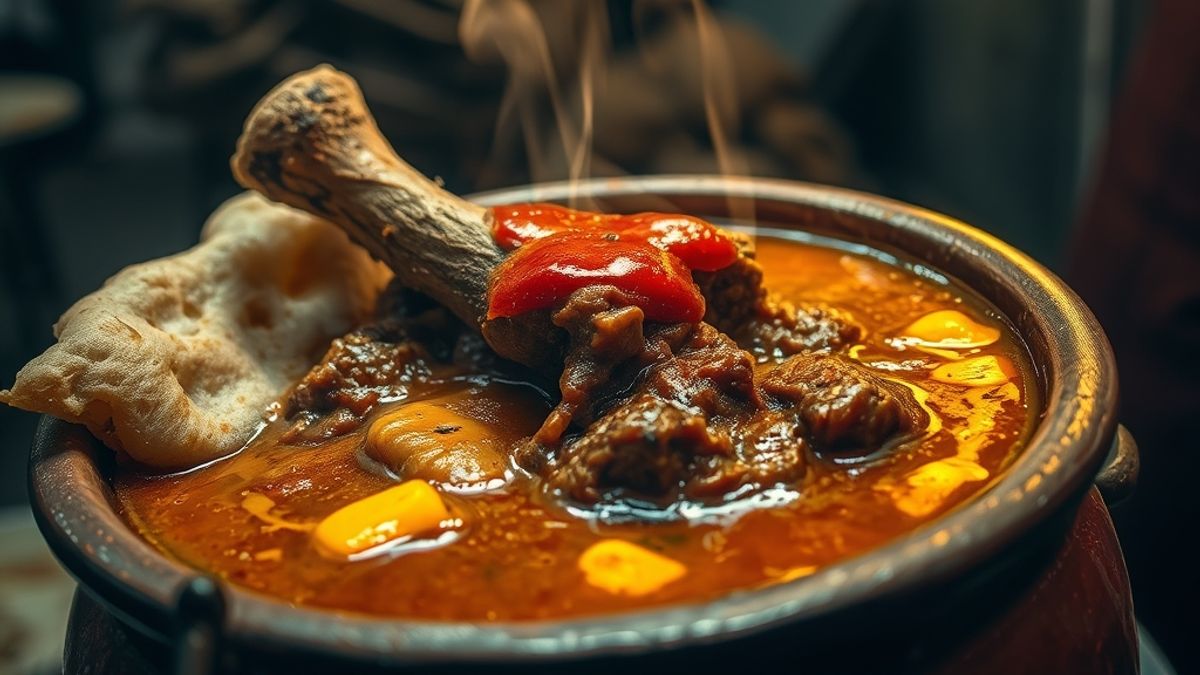
- Nalli nihari — the dish to build the night around. Mutton with the marrow bone (the nalli) simmered for hours into a deep, spiced, melt-off-the-bone stew, mopped up with soft khameeri roti. Noor Mohammadi, an institution serving in Bhendi Bazaar since the 1920s, is the name most associated with it, along with its white biryani and the much-loved Chicken Sanju Baba. Expect roughly ₹200–400 for a hearty plate.
- Seekh and boti kebabs — minced and chunked mutton grilled over open coals, served with raw onion and lime. Roughly ₹150–300 a plate depending on where and how much.
- Bara handi / handi meat — a row of simmering pots (the “twelve pots”) each holding a different cut and gravy, ladled out over hours. Look for the well-known handi spots along the stretch and point at whatever looks richest.
Order the nihari first so it is in front of you while you graze on kebabs — it is at its richest at the very start of the meal, before it cools.
The offal and tawa-fry lane
This is where the trail turns properly local and properly delicious. If organ meats are not your thing, skip ahead — but if you are curious, this is the place to be brave.
- Tawa fry — bheja (brain), gurda (kidney), kaleji (liver) and kheema seared hard on a flat griddle with masala until crisp at the edges. Small plates, big flavour; roughly ₹120–250.
- Zaban (tongue) — done as a fry or in a soupy gravy, tender and rich, a genuine specialty of the quarter.
- Khiri and seekh — udder kebab and more seekh varieties turn up at the busier grills.
For a slightly different flavour, wander toward Bohri Mohalla on Khara Tank Road, where the Dawoodi Bohra community serves its own dishes and the crowd is a touch calmer than the main road. Bohra food is milder and more delicately spiced than the fierce grills of the main stretch — look for smoked kheema samosas, dabba gosht and rich mutton preparations, and the community’s signature raan (slow-roasted leg of mutton) at the bigger counters during Ramzan.
A suggested order for first-timers
If the sheer choice is overwhelming, this is a reliable sequence for a first visit that hits the highlights without wrecking your stomach:
- One plate of nalli nihari with khameeri roti to share, eaten first while it is hottest.
- A plate of seekh kebabs off the coals with raw onion and lime.
- One tawa-fry item — start with kaleji (liver) if you are new to offal; it is the most approachable.
- A cut of handi meat if a bara-handi stall looks busy.
- Malpua with rabri and a clay pot of phirni to finish, from Suleman Usman or Tawakkal.
Order in that order, share everything, and you will have tasted the whole quarter in one walk without over-committing to any one thing.
Drinks and the after-dinner scene
The food is heavy, and the quarter knows it — the cold, sweet drinks here are half the fun and exist precisely to cut the richness.
- Dry-fruit and mawa milkshakes and thick malai drinks are sold from juice counters along the stretch, especially busy after iftar in Ramzan.
- Falooda — the tall glass of milk, rose syrup, sabja seeds, vermicelli and ice cream — is the classic cooler to end on.
- Aflatoon and rabri in cups travel well if you want something sweet for the walk back to the station.
Just outside the food lanes, the Minara Masjid stretch is lit up green through Ramzan and worth a slow look — the lights, the crowds and the smoke together are as much the experience as any single plate.
Finish on the sweets: malpua, phirni and jalebi
You cannot leave without dessert, and the sweet shops here are as old and as famous as the kitchens.
- Malpua with rabri — a fried, syrup-soaked pancake crowned with thick reduced-milk rabri. Rich, sticky, unforgettable.
- Phirni — a chilled, cardamom-scented ground-rice pudding, traditionally set in small clay pots (matka) that keep it cool and lend an earthy note.
- Mawa jalebi — a denser, richer cousin of the everyday jalebi, plus shahi tukda (bread pudding) and aflatoon.
The old sweet names to look for are Suleman Usman Mithaiwala (roots in the 1920s, near Minara Masjid) and Tawakkal Sweets, both long-standing favourites for malpua and phirni. Sweets run roughly ₹80–250 a portion. Buy a matka of phirni to carry home even if you are too full to eat it there.
Why this quarter cooks the way it does
Bhendi Bazaar and Mohammed Ali Road grew as the commercial and residential heart of Mumbai’s Muslim communities — Konkani Muslims, Memons, Bohras and migrants from across North India — and the food reflects that layering. The Mughlai slow-cooking of nihari and biryani sits beside the community-specific cooking of the Bohras a few lanes over, and the whole quarter organises itself around the rhythms of the mosque and, above all, the fasting month of Ramzan. The century-old names here — Noor Mohammadi from the 1920s, Suleman Usman from the same era — are family businesses that have cooked the same dishes for four or five generations. That continuity is exactly why the food tastes the way it does: these are not restaurants chasing trends but kitchens keeping a recipe. Eating here is as much a walk through the city’s social history as it is a meal.
How to eat the trail like a local
- Go hungry, share everything. Portions are generous and the joy is in tasting widely. Come in a group of three or four and order across the stalls rather than filling up at one.
- Carry cash. Many of the oldest counters are cash-first, and small notes save you time in a crowd, even where UPI now works.
- Eat where the locals queue. A busy counter means fast turnover and fresh food — trust the lines over any signboard.
- Pace the richness. Nihari, tawa fry and malpua are all heavy. Alternate meat with a nimbu paani or a cutting chai and you will last the whole trail.
- Mind hygiene sensibly. Stick to hot, freshly cooked, fast-moving stalls, and you will be fine. Skip anything sitting cold.
- Come early during Ramzan. The lanes are calmest just after iftar and turn into a genuine crush by 9–10pm on weekend nights.
- Dress light and travel light. It is hot, smoky and packed; leave the big bag at home, keep your phone and cash secure, and wear shoes you do not mind getting grubby.
- Ask before photographing people. This is a living neighbourhood, not a set — the food and the lights are fair game, but a quick nod before you point a camera at a cook goes a long way.
If this trail leaves you wanting more of Mumbai’s Muslim and Mughlai kitchens, it pairs naturally with a wider Mughlai and kebab crawl across the city and with Mumbai’s broader street food and desserts and mithai scenes.
Plan your evening
Land at Masjid Bunder by 7:30pm, walk in through Bhendi Bazaar, and start with a plate of nihari and roti at Noor Mohammadi while the coals are still fierce. Graze kebabs and a handi cut along the main stretch, dip into the tawa-fry lane if you are game, then finish with malpua and a clay pot of phirni from Suleman Usman. Go hungry, carry cash, pace the richness, and — if you can time it for Ramzan — come early and let one of Mumbai’s greatest food nights unfold around you.
Frequently Asked Questions
What is the most famous dish on Mohammed Ali Road?
Nalli nihari, a slow-cooked mutton-and-marrow stew eaten with soft khameeri roti, is the signature dish, most associated with the century-old Noor Mohammadi in Bhendi Bazaar. Malpua with rabri and clay-pot phirni are the star sweets to finish on.
When is the best time to visit Mohammed Ali Road for food?
Evenings from around 7:30pm onwards year-round, and above all during Ramzan, when the lanes stay open into the small hours and the whole quarter becomes a food festival. Weeknights are far less crowded than Ramzan weekends, so go early in the evening if you want elbow room.
How do I reach Mohammed Ali Road by train?
Masjid Bunder station on the Central and Harbour lines is the nearest, about a ten-minute walk. Marine Lines on the Western line is roughly fifteen minutes on foot, and CSMT is a short taxi ride away. The last leg is always on foot, as the lanes are too narrow and jammed for a car.
How much does the Mohammed Ali Road food trail cost?
It is cheap for how much you eat. A hearty plate of nihari runs roughly ₹200–400, kebabs ₹150–300, tawa fry ₹120–250 and sweets ₹80–250 a portion. A group of three or four grazing across the stalls can eat superbly for a few hundred rupees a head. Carry cash, as many old counters are cash-first.
Is Mohammed Ali Road vegetarian-friendly?
Not really — this is a meat-forward Mughlai and Muslim-community food quarter, built around nihari, kebabs and offal. Vegetarians can enjoy the sweets (malpua, phirni, jalebi) and drinks like falooda, but the savoury trail is firmly for meat-eaters.