Doorway Effect Causes Temporary Memory Lapses
Entering a room can make you forget why you went in. Find out why.
'%3E%3Crect%20width%3D'96'%20height%3D'96'%20fill%3D'%23B3261E'%2F%3E%3Ccircle%20cx%3D'30'%20cy%3D'24'%20r%3D'44'%20fill%3D'%23fff'%20opacity%3D'.12'%2F%3E%3Ccircle%20cx%3D'60'%20cy%3D'74'%20r%3D'40'%20fill%3D'%23000'%20opacity%3D'.10'%2F%3E%3C%2Fg%3E%3Cg%20fill%3D'%23fff'%3E%3Crect%20x%3D'29'%20y%3D'49'%20width%3D'8'%20height%3D'19'%20rx%3D'1'%2F%3E%3Crect%20x%3D'39'%20y%3D'40'%20width%3D'9'%20height%3D'28'%20rx%3D'1'%2F%3E%3Crect%20x%3D'50'%20y%3D'45'%20width%3D'8'%20height%3D'23'%20rx%3D'1'%2F%3E%3Crect%20x%3D'60'%20y%3D'53'%20width%3D'7'%20height%3D'15'%20rx%3D'1'%2F%3E%3Crect%20x%3D'41'%20y%3D'34'%20width%3D'5'%20height%3D'6'%2F%3E%3C%2Fg%3E%3C%2Fsvg%3E)
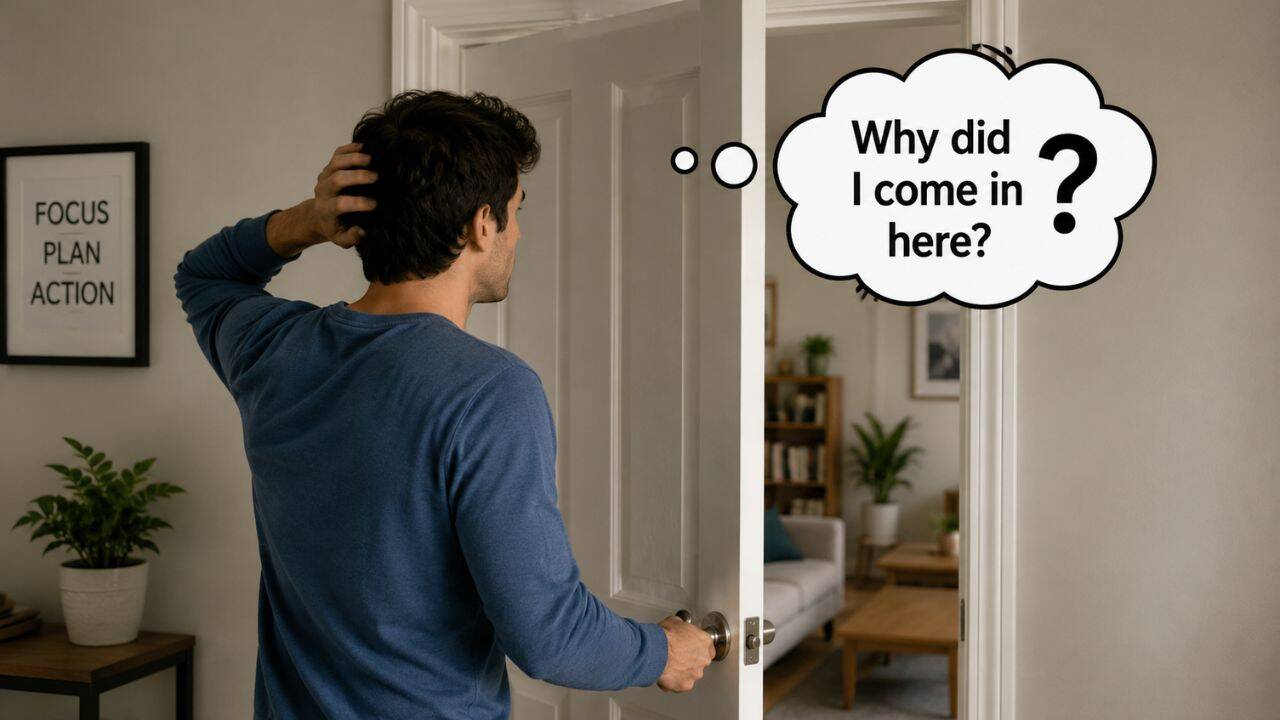
Have you ever walked into a room and suddenly forgotten why you entered it in the first place? This common phenomenon is known as the doorway effect. It occurs when entering a new room causes a temporary memory lapse, making you forget your original intention.
The doorway effect is a normal process that the brain uses to organize experiences into distinct events. When you enter a new room, your brain updates its mental model of the environment, which can cause a shift in attention. This shift in attention, combined with the limitations of working memory, can lead to forgetful moments.
Research has shown that the doorway effect is not just about forgetting why you entered a room, but also about how the brain processes and stores information. The brain is constantly updating its mental model of the environment, and this process can cause temporary memory lapses.
One of the main reasons for the doorway effect is the way the brain organizes events into separate episodes. When you enter a new room, your brain creates a new episode, which can cause the previous episode to be forgotten. This is because the brain has limited capacity for storing information, and it needs to prioritize the most relevant information.
Another factor that contributes to the doorway effect is attention. When you enter a new room, your attention is shifted to the new environment, which can cause you to forget your original intention. This shift in attention can be caused by various factors, such as the layout of the room, the people in the room, or the objects in the room.
Fortunately, there is a way to retrieve the forgotten thought. Retracing your steps often helps to restore the context, which can trigger the memory of why you entered the room in the first place. This is because the brain uses context to store and retrieve information, and retracing your steps can provide the necessary context to retrieve the forgotten memory.
The doorway effect is a common experience that many people can relate to. It is not a sign of memory loss or cognitive decline, but rather a normal process that the brain uses to organize experiences. By understanding the doorway effect, we can better appreciate the complex processes that occur in the brain and how they affect our daily lives.
In conclusion, the doorway effect is a normal brain process that can cause temporary memory lapses. It is caused by the brain's limited capacity for storing information, attention shifts, and the way the brain organizes events into separate episodes. By retracing our steps and restoring context, we can often retrieve the forgotten thought and continue with our original intention.
The doorway effect is an interesting phenomenon that highlights the complexities of the human brain. It shows how the brain processes and stores information, and how it can be affected by various factors, such as attention and context. By studying the doorway effect, researchers can gain a better understanding of the brain's functions and how they impact our daily lives.
Overall, the doorway effect is a common experience that can be frustrating at times, but it is also a fascinating phenomenon that can provide insights into the workings of the human brain.