
The Bandra Neighbourhood Guide
A local's guide to Bandra West: Ranwar village, Chapel Road street art, Mount Mary, the Bandstand and Carter Road promenades, Pali Naka cafés and shopping.
'%3E%3Crect%20width%3D'96'%20height%3D'96'%20fill%3D'%23E65100'%2F%3E%3Ccircle%20cx%3D'30'%20cy%3D'24'%20r%3D'44'%20fill%3D'%23fff'%20opacity%3D'.12'%2F%3E%3Ccircle%20cx%3D'60'%20cy%3D'74'%20r%3D'40'%20fill%3D'%23000'%20opacity%3D'.10'%2F%3E%3C%2Fg%3E%3Cg%3E%3Ccircle%20cx%3D'48'%20cy%3D'48'%20r%3D'15'%20fill%3D'none'%20stroke%3D'%23fff'%20stroke-width%3D'3'%2F%3E%3Cpath%20fill%3D'%23fff'%20d%3D'M48%2037%20l3.5%2011%20-3.5%2011%20-3.5%20-11%20z'%2F%3E%3Ccircle%20cx%3D'48'%20cy%3D'48'%20r%3D'2.2'%20fill%3D'%23fff'%2F%3E%3C%2Fg%3E%3C%2Fsvg%3E)
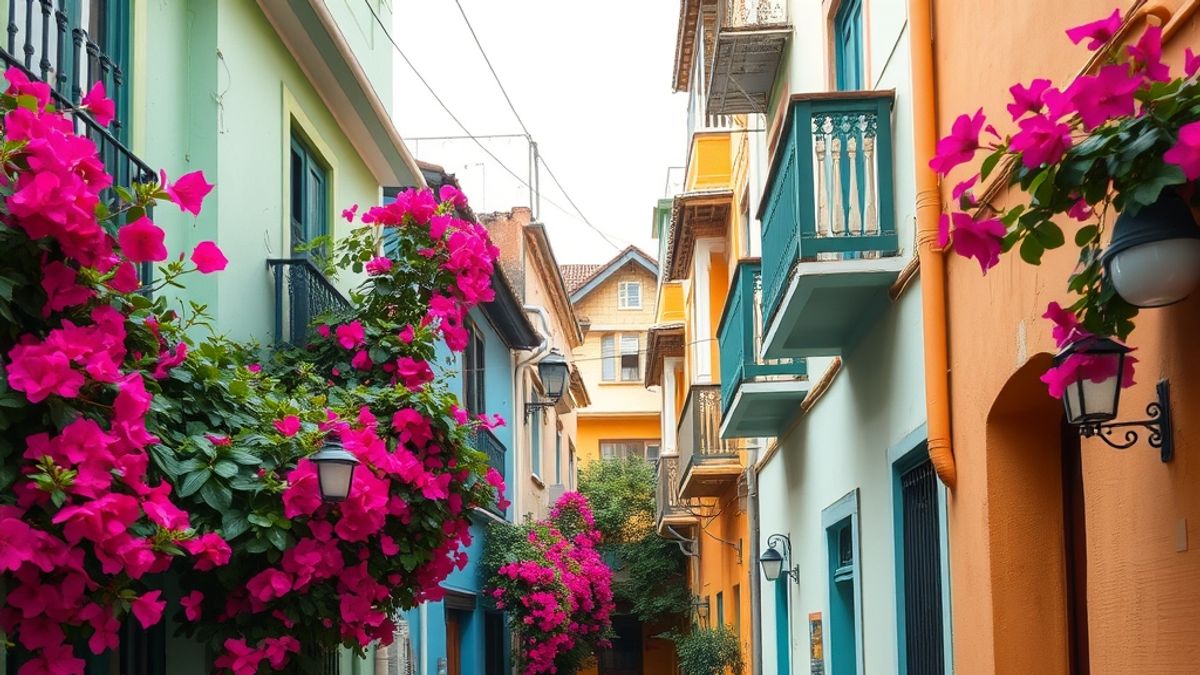
Photo: Nicholas (Nichalp) · CC BY-SA 3.0 · via Wikimedia Commons
Bandra is Mumbai’s most talked-about neighbourhood, and it wears the reputation lightly. This is the suburb of film stars and street art, of centuries-old Portuguese-Catholic villages sitting next to buzzing cafés, of two lovely seafront promenades and some of the best people-watching in the city. It is not a place you tick off in an hour. It is a place you read slowly, on foot, letting one lane lead into the next, and the payoff is a version of Mumbai that feels both very old and very now. Here is how to make sense of it.
A quick orientation first. When people say “Bandra” for a day out, they almost always mean Bandra West — the side of the railway line that runs from the station down to the sea, holding the villages, the promenades, the shopping streets and the café belt. Bandra East is a different animal: office towers, the Kurla complex, the government colony. Everything in this guide sits in the West, in a compact wedge you can cross on foot in twenty minutes, though you will rarely want to hurry.
Bandra at a glance
Use this as a rough map of what each pocket is for, when it is at its best, and what you might spend. Treat the prices as honest ranges rather than fixed rates — Bandra changes its menus and its shopfronts faster than almost anywhere in the city.
| Best for | Best time | Rough spend (per person) | |
|---|---|---|---|
| Ranwar village | Heritage lanes, quiet cottages | Early morning | Free |
| Chapel Road | Street-art murals, photos | Morning light | Free |
| Mount Mary | Church, sea view, September fair | Any time; mornings calm | Free |
| Bandstand | Seafront walk, Mannat, the Fort | Sunset | Free (₹150–400 for a snack) |
| Carter Road | Café-lined promenade, evening buzz | Late afternoon on | ₹200–600 for a bite |
| Pali Naka / Pali Hill | Coffee, brunch, drinks, dinner | Late morning; evenings | ₹300–500 coffee/brunch; ₹1,200+ dinner |
| Linking & Hill Roads | Street shopping, bargaining | Late afternoon | ₹200–800 an item, negotiable |
How Bandra is laid out
The station is the practical centre of gravity. Walk west from it and the neighbourhood rises gently into the low hills — Pali Hill, Mount Mary — before dropping to the sea on the far side. The old Catholic character clings to the higher ground and the inner lanes; the newer money and the café culture spill along the flatter streets and the coast. Two seafront stretches, Bandstand and Carter Road, bookend the western edge and give the whole area its evening rhythm.
If this is your first Mumbai suburb, it helps to see where Bandra fits in the larger picture — our Mumbai neighbourhoods guide sets it beside Colaba, Dadar, Juhu and the rest. And if you want to pair it with a beach afternoon, neighbouring Juhu is a short drive north.
Ranwar and the old villages
Long before Bandra was fashionable it was a cluster of Catholic gaothans — village pockets settled in the Portuguese era, when this was a fishing and farming outpost well outside the city. Several survive in fragments, but the most atmospheric is Ranwar village, a roughly 300-year-old warren of lanes just off Waroda and Veronica Roads. Here, wooden porches, gabled roofs and Mangalore-tiled cottages still line quiet, sun-dappled streets, some of them painted in soft blues and greens, many with a little shrine or a cross set into the wall.
How to read a gaothan
Walk it in the morning, when the light is low and the lanes are still. The pleasure is in the detail: the East Indian and Goan family names on the gateposts, the old bread-oven bakeries, the way a modern apartment block suddenly gives way to a single-storey home that has not changed in a century. This is living heritage, not a museum, so keep your voice down, do not wander into private courtyards, and ask before photographing anyone at home. If Ranwar leaves you wanting more of this vanishing Mumbai, the Khotachiwadi heritage village in Girgaon is its downtown cousin, and a heritage architecture walk threads the same thread through the older city.
Chapel Road and the street art
Running close to the villages, Chapel Road has become the neighbourhood’s open-air gallery. Since the Bombay Art Project began painting here in 2012, its walls have filled with vivid, changing murals — many celebrating Bollywood and the city’s own icons, from film legends to everyday Mumbai characters. It is one of the most photographed lanes in the city and a lovely, aimless stroll: there is no route, no ticket and no right way to do it. You simply drift and look up.
Because the art is repainted and added to over time, no two visits are quite the same, and a piece you loved last year may have been replaced. Go in the morning for the best light and the fewest people, and remember that these are residential lanes — the murals are the backdrop to people’s front doors, so be considerate with tripods and long photo sessions.
Mount Mary and the Catholic heart
On a hillock above the sea sits the Basilica of Our Lady of the Mount, better known simply as Mount Mary Church — one of Mumbai’s oldest and most beloved places of worship. The church you see is not ancient in its current form, but the devotion attached to it runs deep, drawing worshippers of many faiths who come to light a candle and offer wax figures for a wish or a healing.
The Bandra Fair
Every September, in the week following the feast of the Nativity of Mary, the church hosts the Bandra Fair (the Bandra Feast), a week-long celebration that fills the surrounding lanes with stalls, sweets, toys, wax offerings and enormous crowds. It is loud, sticky and wonderful — one of the city’s great mixed-community gatherings. If you plan to time your visit to it, read our dedicated guide to Mount Mary Church and the Bandra Fair first, because the crowd management and the road closures are worth understanding in advance. On an ordinary day, though, the hilltop is a calm spot with a genuine view of the sea, and it costs nothing to sit for a while.
The two promenades
Bandra’s coastline gives it two of the nicest walks in the city, and locals treat them as an evening ritual rather than a sight to see.
Bandstand
The Bandstand Promenade is a roughly 1.2-kilometre seafront walkway on the western edge, lined with joggers, courting couples and families out for the air. It passes some famous addresses — most notably Mannat, Shah Rukh Khan’s seafront home, which draws a permanent, patient knot of fans hoping for a wave from the balcony. Keep walking and the promenade ends at Bandra Fort (Castella de Aguada), a Portuguese-era ruin from the seventeenth century perched on the rocks. It is small and free to enter, and its real gift is the view: at dusk the whole Bandra–Worli Sea Link lights up across the water, and the fort is one of the finest places in the city to watch it. For more angles on that bridge, see our roundup of Sea Link viewpoints, and for the wider sunset map, our guide to the best sunset viewpoints in Mumbai.
Carter Road
A little further along the coast, Carter Road is the slightly longer and busier promenade — thick with cafés, chaat and coffee stalls, small boutiques and an amphitheatre that sometimes hosts music and events. This is where the neighbourhood comes to unwind on weekend evenings, and the crowd is the show: dog-walkers, students, families, the occasional film face in a cap. Grab a cutting chai or a sandwich from a stall, find a spot on the sea wall, and watch the light go. It is unglamorous in the best way, and it is free.
Pali Naka, Pali Hill and the café-and-bar scene
Inland from the water, Pali Naka and the leafier Pali Hill are Bandra’s dining engine — a dense, ever-changing spread of cafés, restaurants, bars, bakeries and spas packed into a few walkable lanes. This is where you come for a long brunch, a serious flat white, or a drinks-and-dinner evening that spills from one address into the next. The important thing to understand about Bandra is that it opens and closes places quickly: a beloved café can vanish and a new one can appear in the same shopfront within a season. So the smart move is to wander, read the room, and follow the crowd rather than chase a single name you read about last year.
Coffee and brunch
Bandra was where Mumbai’s third-wave coffee culture really took hold, and the neighbourhood is thick with roasters and single-origin bars. Expect to pay around ₹250–400 for a well-made pour-over or cappuccino, and a little more if you settle in for a full plate. For where to start, our guides to the best cafés in Bandra, the city’s specialty-coffee spots and the best weekend brunch all lean heavily on this postcode. A relaxed brunch will typically run ₹800–1,500 a head before drinks; a quick coffee-and-a-bun stop, far less.
Food beyond the cafés
Bandra eats well at every price point, from Irani-café nostalgia to seafood to late-night rolls. Rather than list addresses that may have changed, walk the lanes off Pali Naka and Hill Road with an appetite — and if you want a plotted route, our Bandra food trail does the mapping for you, from breakfast to supper.
Evenings and bars
After dark, the same lanes become the suburb’s nightlife hub — everything from candle-lit cocktail rooms to loud, cheerful gastropubs. A cocktail sits around ₹500–800, a beer rather less, and dinner-with-drinks for two can run anywhere from modest to memorable depending on where you land. Our guide to Bandra bars and nightlife is the honest local map. A fair caveat: Mumbai’s bars generally wind down by around 1:30 am, so the Bandra “late night” is earlier than you might expect, and weekend waits at the popular rooms can be real.
Shopping: Linking Road and Hill Road
Bandra’s street shopping is a sport of its own, and it centres on two strips. Linking Road is the famous one — a long run of pavement stalls and small shops selling shoes, bags, tops, denim and accessories, all of it negotiable. Hill Road, running roughly parallel, is a little more chaotic and just as fun, strong on clothes, footwear and cheap accessories. Prices start high for tourists, so bargain without embarrassment; a stall tee quoted at ₹500 may well close nearer ₹250, and buying two or three items gives you leverage. Come in the late afternoon when the stalls are fully out, carry small cash, and keep your bag zipped in the crush. For the full lay of the land, our Linking Road shopping guide breaks down what to buy where and how to haggle.
A suggested day, hour by hour
You can absolutely dip in and out, but Bandra rewards a full, unhurried day. Here is a rhythm that flows well and keeps you ahead of both the heat and the crowds.
- Early morning: start in Ranwar village while the lanes are quiet, then drift through Chapel Road’s murals in the soft light.
- Late morning: climb to Mount Mary for the view and a moment of calm, then walk down for coffee at Pali Naka.
- Midday: a long, lazy brunch in the Pali Hill lanes — the sun is high, so this is the hour to be indoors and unhurried.
- Afternoon: shop Linking Road and Hill Road as the stalls fill up, bargaining as you go.
- Late afternoon to sunset: walk the Bandstand promenade out to Bandra Fort, timing it so you catch the Sea Link lighting up across the water.
- Evening: loop back to Pali Naka for dinner and drinks, or settle onto Carter Road for a stall bite and the passing crowd.
If your legs give out before your appetite does, autos are plentiful for the longer hops between the seafront and the hill.
Practical tips
Getting there and around
Bandra station — on both the Western and Harbour lines — is the hub, and the train is the fastest way in from most of the city. If you are new to the suburban network, our local train guide explains the lines, the ladies’ compartments and the etiquette; for taxis, autos, buses and the wider picture, see getting around Mumbai. From South Mumbai, the Bandra–Worli Sea Link is the fast, scenic road route — a taxi over the bridge runs roughly ₹400–600 plus the toll, and the ride itself is part of the fun. Once you have arrived, go on foot: Bandra West is compact and made for walking, with short auto hops (₹25–40) for the stretches between the hill and the sea.
When to go
The comfortable window is the cooler October-to-March season, when a full day outdoors is genuinely pleasant. April and May are hot and sticky, best broken up with long indoor café stops. The monsoon (roughly June to September) turns Bandra moody and green — the promenades are dramatic under grey skies — but come prepared for heavy rain and waterlogged lanes, and keep a café in reach. Weekends are the liveliest and by far the most crowded, especially the promenades and Pali Naka after dark; a weekday visit trades some of the buzz for a lot more room.
Etiquette and small print
- The villages and the murals sit among people’s homes. Keep noise down, do not block doorways for photos, and ask before pointing a camera at residents.
- Carry small cash for stalls, autos and chai, even though most cafés and shops take cards and UPI.
- At Mannat, admire from the promenade — it is a private home, and the footpath is as close as you get.
- Bars fill up on weekends and close earlier than many visitors expect, so book ahead if a specific room matters to you.
- Watch your bag and phone in the shopping crush on Linking and Hill Roads, as you would in any busy market.
The bottom line
Bandra rewards curiosity more than a checklist. Give it a full, unhurried day: village lanes and street art in the morning, a hilltop church and good coffee at midday, street shopping in the afternoon, and a seafront sunset rolling into dinner. Do not over-plan it — half the charm is the wrong turn that lands you in a lane of blue cottages or a café you had never heard of. It is the neighbourhood that best captures modern Mumbai’s mix of old faith, new money and easy creative cool, and the surest way to enjoy it is simply to walk, look up often, and let it unfold.
Frequently Asked Questions
What is Bandra West famous for?
Bandra West is famous for being Mumbai's coolest, most creative suburb — a mix of centuries-old Portuguese-Catholic villages like Ranwar, the Chapel Road street-art murals, and the Mount Mary church on the hill. It is equally known for its café and bar scene around Pali Naka, its two seafront promenades at Bandstand and Carter Road, and its street shopping on Linking and Hill Roads. It is also Bollywood's home turf, with several film stars living in the area, including Shah Rukh Khan at Mannat on Bandstand.
How much time do you need to explore Bandra?
Give Bandra a full, unhurried day to see it properly. The neighbourhood is compact and best explored on foot, but its pleasures are slow ones — wandering village lanes, lingering over coffee, and watching a seafront sunset. A rough rhythm is villages and street art in the morning, the church and a brunch at midday, street shopping in the afternoon, and the Bandstand promenade at sunset before dinner. If you only have a few hours, focus on either the heritage lanes and Mount Mary, or the promenades and Pali Naka café belt.
How do you get to Bandra and get around once there?
The fastest way in is usually the local train to Bandra station, which sits on both the Western and Harbour lines. From South Mumbai, the Bandra–Worli Sea Link is the quick, scenic road route, with a taxi running roughly ₹400–600 plus toll. Once you arrive, walk — Bandra West is compact and made for it — and use autos, at about ₹25–40, for the longer hops between the hill and the seafront.
When is the best time to visit Bandra?
The most comfortable window is the cooler October-to-March season, when a full day outdoors is genuinely pleasant. Weekends are the liveliest and most crowded, especially the promenades and Pali Naka after dark, so a weekday visit gives you far more room. The monsoon, from about June to September, turns the promenades moody and dramatic but brings heavy rain and waterlogging, so keep a café within reach. Mornings are best for the quiet village lanes and street art, while late afternoon into sunset suits the seafront.
What is the Bandra Fair and when does it happen?
The Bandra Fair, also called the Bandra Feast, is a week-long celebration held every September at Mount Mary Church, in the week following the feast of the Nativity of Mary. The lanes around the basilica fill with stalls selling sweets, toys and wax offerings, and enormous, joyful crowds of many faiths. It is one of the city's great mixed-community gatherings. Expect road closures and heavy footfall during the fair, so plan your visit and your route in advance.
Can you see Shah Rukh Khan's house Mannat in Bandra?
Yes — Mannat, Shah Rukh Khan's seafront home, sits on the Bandstand Promenade and is one of Bandra's most-visited spots. Fans gather on the footpath opposite hoping for a wave from the balcony, and the exterior is easy to see as you walk the promenade. It is a private residence, though, so the public footpath is as close as you can get; admire it from there and keep the path clear for others.