
The Mumbai Vada Pav Trail: Best Stalls, City-Wide
A city-wide vada pav trail across Mumbai — Ashok in Dadar, Anand in Vile Parle, Gajanan in Thane, plus cheese and schezwan variants, timings and ₹ prices.
'%3E%3Crect%20width%3D'96'%20height%3D'96'%20fill%3D'%23B3261E'%2F%3E%3Ccircle%20cx%3D'30'%20cy%3D'24'%20r%3D'44'%20fill%3D'%23fff'%20opacity%3D'.12'%2F%3E%3Ccircle%20cx%3D'60'%20cy%3D'74'%20r%3D'40'%20fill%3D'%23000'%20opacity%3D'.10'%2F%3E%3C%2Fg%3E%3Cg%20fill%3D'%23fff'%3E%3Crect%20x%3D'29'%20y%3D'49'%20width%3D'8'%20height%3D'19'%20rx%3D'1'%2F%3E%3Crect%20x%3D'39'%20y%3D'40'%20width%3D'9'%20height%3D'28'%20rx%3D'1'%2F%3E%3Crect%20x%3D'50'%20y%3D'45'%20width%3D'8'%20height%3D'23'%20rx%3D'1'%2F%3E%3Crect%20x%3D'60'%20y%3D'53'%20width%3D'7'%20height%3D'15'%20rx%3D'1'%2F%3E%3Crect%20x%3D'41'%20y%3D'34'%20width%3D'5'%20height%3D'6'%2F%3E%3C%2Fg%3E%3C%2Fsvg%3E)
The Top 12
- 01
Ashok Vada Pav (Ashok Vaidya)
Dadar West, near Kirti College / Shivaji Park ~₹25–35 a vada pav; approx ₹80–120 for twoGo for: The spiritual home of the vada pav (1960s origin). Order the classic vada pav and the famous 'chura pav' — soft pav stuffed with crunchy fried batter bits and dry garlic chutney.
Go mid-morning or around 5–6 pm to dodge the longest queues, and carry cash.
- 02
Aaram Vada Pav
Fort, opposite CSMT/CST station ~₹25–40 a vada pav; approx ₹90–130 for twoGo for: 70-plus-year legacy; big vadas made without turmeric (pale 'white' bhaji), stuffed with fried green chilli and onion. Their misal is also worth a try.
Eat it standing at the stall while it's piping hot — it's the perfect quick bite before a train.
- 03
Anand Stall (Anand Vada Pav)
Vile Parle West, opposite Mithibai / NM College ~₹30–50 a vada pav; approx ₹120–160 for twoGo for: College-canteen legend famous for its butter-grilled and cheese vada pav. Pair it with a cutting chai.
Student rush peaks at lunch and early evening; come slightly off-hours for a calmer counter.
- 04
Gajanan Vada Pav
Thane West, Naupada (near Thane station) ~₹20–30 a vada pav; approx ₹80–110 for twoGo for: Running since 1978; famous for its dry choora-and-green-chilli yellow chutney, served the old-school way on a leaf.
It gets mobbed at commuter hours — arrive a little before the evening rush.
- 05
Shivaji Park Vada Pav
Dadar West, Shivaji Park ~₹20–35 a vada pav; approx ₹80–110 for twoGo for: Classic Bambaiya vada pav with tangy-spicy chutney and a fried green chilli on the side; reputedly a Sachin Tendulkar favourite.
Fold it into a walk around Shivaji Park and eat it fresh off the kadai.
- 06
Samrat Vada Pav
Vile Parle ~₹40–70 a vada pav; approx ₹120–180 for twoGo for: The go-to for a loaded cheese-burst vada pav and other cheesy fusion versions.
Order it grilled and come hungry — the fillings are generous.
- 07
Kunjvihar (Kunj Vihar)
Thane West, near Thane station ~₹25–40 a vada pav; approx ₹100–140 for twoGo for: Lightning-fast classic vada pav (assembled in a couple of minutes); also strong on misal pav and lassi.
Ideal grab-and-go right by the station — expect a brisk, no-frills counter.
- 08
Graduate Vada Pav
Thane (multiple outlets) ~₹30–60 a vada pav; approx ₹120–180 for twoGo for: The fusion specialist — Schezwan, tandoori and peri-peri cheese vada pav.
Come here for the experimental flavours rather than the purist classic.
- 09
Jai Maharashtra Vada Pav
Andheri West ~₹20–35 a vada pav; approx ₹90–120 for twoGo for: Crisp, coriander-flecked aloo vada with fresh mint and garlic chutneys.
A cheap, handy bite near the station — best eaten hot and fresh.
- 10
Khidki Vada Pav
Kalyan ~₹20–30 a vada pav; approx ₹80–110 for twoGo for: A Kalyan institution reportedly running since the late 1960s; fiery, spicy vada pav passed through a small window ('khidki').
Worth it if you're already out in Kalyan; expect a steady crowd.
- 11
Jumbo King
Citywide chain (first outlet in Malad) ~₹30–60 a vada pav; approx ₹120–180 for twoGo for: India's first branded vada-pav chain (est. 2001) — consistent, hygienic classic plus cheese and Schezwan versions.
Your reliable standardised option when you want clean, quick and predictable over heritage.
- 12
Goli Vada Pav
Citywide chain ~₹30–60 a vada pav; approx ₹120–180 for twoGo for: Quick-serve packaged vada pav in many flavours — schezwan, cheese and makhani among them.
Handy for a fast, familiar bite in malls and stations rather than a street-stall experience.
Ranked by our Mumbai desk · prices are approximate — confirm before you go.
Vada pav is Mumbai’s true fast food: a spiced potato dumpling, deep-fried in gram-flour batter, crushed into a soft pav with garlic chutney, and handed to you in a scrap of newspaper for the price of a bus ticket. It fed the mill workers of central Mumbai, and it still fuels the city — office-goers, students, cabbies, everyone. This trail is built around the stalls that matter and the neighbourhoods that gave the snack its identity. Eat it hot, standing up, with the fried green chilli on the side.
Vada pav trail: quick reference
| Stall | Area | Approx cost (₹) | Best time | Nearest station |
|---|---|---|---|---|
| Ashok Vada Pav | Dadar (the original) | 20–40 | Frying rushes | Dadar (Western/Central) |
| Anand Vada Pav | Vile Parle, Mithibai College | 20–50 | Late morning / mid-afternoon | Vile Parle (Western) |
| Gajanan Vada Pav | Thane | 20–50 | Morning / evening | Thane (Central) |
| Jumbo King | City-wide chain | 40–90 | Any time | Various |
Start where it started: Dadar
The story begins outside Dadar station, where Ashok Vaidya is widely credited with putting the fried vada inside a pav in the mid-1960s, feeding the textile-mill workforce that surrounded the area. Ashok Vada Pav, still run by the family near the western-line platforms, is the pilgrimage stop — a small, no-frills counter that regularly tops “best in Mumbai” lists in the food press. The vada is fresh, the chutney sharp with garlic, and the queue is part of the experience.
Dadar is also the crossroads of the Western and Central railway lines, which makes it the natural place to begin a trail. It sits in the heart of the old mill district, so you are eating the snack where it was born, surrounded by the flower market, the temples and the crowds that gave it a reason to exist. If you are already exploring Maharashtrian food in Mumbai, you are on exactly the right turf — this is snack-institution country.
The suburban legends: Vile Parle and Thane
Head north-west and the trail picks up Anand Vada Pav near Mithibai College in Vile Parle — a stall that built its reputation on generously sized, properly spicy vadas and a loyal student following. It is busiest around college hours, so time your visit for late morning or mid-afternoon if you want it fresh and fast. The Vile Parle pocket is a short walk from the station and easy to fold into a wider western-suburbs food day.
Out in Thane, Gajanan Vada Pav is the name locals send you to. It has been going for decades and is known for its chutneys, especially a dry yellow garlic-and-chilli mix regulars swear by. It sits a little off the standard tourist circuit, which is exactly why it is worth the detour if you are heading that way on the Central line. Thane rewards the traveller willing to go past the obvious South Mumbai stops for something the neighbourhood has kept to itself.
What is the best vada pav variant to order?
The plain vada pav is the benchmark, but the modern menu has expanded well beyond it. At bigger counters and chains you will now find:
- Cheese vada pav — a slice or grating of processed cheese melted against the hot vada. Rich, gooey, popular with the college crowd.
- Schezwan vada pav — smeared with a garlicky, chilli-hot Indo-Chinese schezwan sauce instead of the traditional chutney.
- Cheese-schezwan — the two combined, which is exactly as indulgent as it sounds.
- Butter / grilled versions — the pav toasted with butter on a griddle for extra crunch.
Jumbo King, which grew from a single Mumbai outlet into a large chain, is the reliable place to sample this spread of variants under one roof — expect the full menu of cheese, schezwan, grilled and buttered options at stations across the city. For a purist, though, the plain version at a good stall, made fresh and eaten hot, still beats every add-on.
What to expect at the counter
This is standing-and-eating food, not a sit-down affair. Most stalls are a single fryer, a tray of pav, and jars of chutney. Order, pay a small amount, and eat on your feet or perched nearby. Alongside the vada you will usually get:
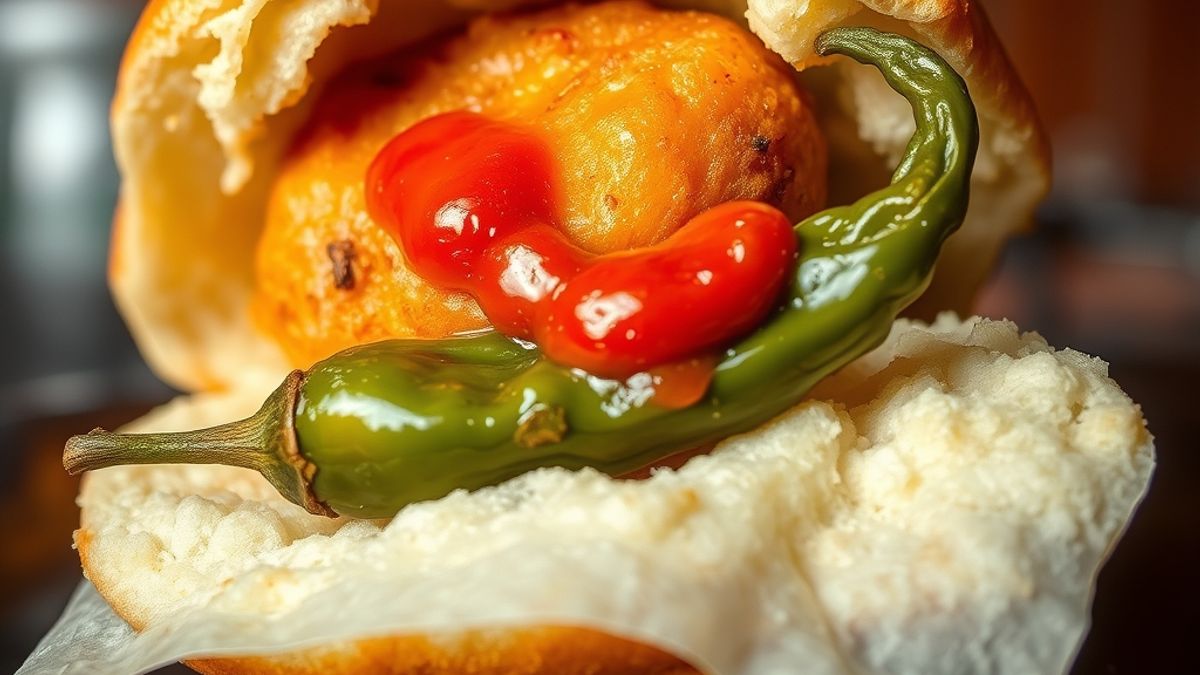
- Fried green chilli — a whole slit chilli, lightly fried and salted. Bite it between mouthfuls if you can handle the heat.
- Dry garlic chutney (lasun chutney) — the red-brown powder that defines the flavour; ask for extra.
- Tamarind and green chutneys — sweet and coriander-mint respectively, at the more elaborate stalls.
The mark of a great vada pav is balance: a crisp, non-greasy batter, a potato filling bright with ginger, garlic, green chilli and mustard seeds, a soft fresh pav, and enough dry garlic chutney to tie it together. A limp, oily vada or a stale pav gives the game away instantly, which is why turnover matters more than reputation.
What it costs
Prices are modest and vary by stall and city area, so treat these as rough bands, not fixed rates:
- A classic vada pav: roughly ₹20–40 at a street stall.
- Cheese or schezwan variants: roughly ₹40–70, depending on the add-on.
- At branded chains, expect the upper end of those ranges, sometimes to ₹90 for a loaded version.
Carry small cash — many stalls still prefer it, though UPI is increasingly accepted. Few foods on earth deliver this much satisfaction for so little, which is precisely why the whole city runs on it.
Best time and monsoon notes
Vada pav is an all-day snack, but it is at its glorious best in the monsoon (June to September), when a hot, crisp vada against Mumbai’s grey, rain-soaked streets is one of the city’s great small pleasures — see our monsoon in Mumbai guide for how to time the rains. In the wet months, look for stalls frying in small fresh batches rather than holding a tray, so the batter stays crisp against the damp. Otherwise, aim for the frying rushes — morning, lunchtime and early evening — when turnover is highest and the vada is freshest out of the oil. Mid-afternoon lulls are the moment you risk a vada that has been sitting.
How to get around the trail
Almost every stop sits near a suburban railway station, which is how most Mumbaikars reach them:
- Dadar (Western and Central lines) for Ashok Vada Pav.
- Vile Parle (Western line) for Anand, a short walk towards Mithibai College.
- Thane (Central line) for Gajanan.
The trains are the fastest way across the city, though crowded at peak hours; a cab or auto for the last stretch keeps it easy. Because the stalls sit at transit hubs, you can knock off two or three in a single north–south run without doubling back. For a wider tour of the food landscape, pair this with our budget eats in Mumbai round-up.
The mill-worker snack that fed a city
Vada pav is not an accident of taste — it is an accident of history. When Ashok Vaidya set up outside Dadar in the 1960s, the surrounding Girangaon mill district ran hundreds of thousands of textile workers on tight shifts and tighter wages. They needed food that was hot, filling, one-handed and cheap enough to buy daily. The vada pav — carbohydrate on carbohydrate, fried, spiced, portable — was the perfect answer, and it spread from the mill gates to every station, office and school in the city. When the mills collapsed after the 1982 strike (a story we tell in our Lower Parel and Worli guide), the snack outlived the industry that created it. Today it is claimed with equal fervour by bankers in Nariman Point and students in Vile Parle. That democratic reach is the whole point: no other food dissolves Mumbai’s class lines quite so completely.
The chains and the modern trail
The vada pav has been industrialised without losing its soul. Jumbo King pioneered the branded, hygienic, station-adjacent model and now runs outlets city-wide, making it the easiest place to sample cheese, schezwan, grilled and buttered riffs in one clean stop. Goli Vada Pav, another home-grown chain, took the snack national and even overseas, standardising the recipe into a reliable, franchised product. These are not where a purist finds the best single vada pav, but they are dependable, air-conditioned and consistent — useful when you want the snack without hunting for the perfect fryer.
Alongside them, a wave of gourmet and fusion versions has appeared: schezwan-cheese overloads, paneer and even “shots” of miniature vada pav at party caterers. Treat these as fun detours, not the main event. The trail’s soul remains the ₹25 classic at a station stall, and the modern menu is best understood as variations on that theme rather than replacements for it.
What to pair with your vada pav
Half the pleasure is what goes alongside. A few classic companions:
- Cutting chai — a small, strong, sweet glass of milky tea is the traditional wash-down, especially in the monsoon. Most vada pav stalls sit within arm’s reach of a chai counter.
- Masala pav or bhaji — some stalls also griddle a buttered masala pav, a close cousin worth ordering if you are still hungry.
- Kanda bhaji or batata vada solo — the same fryer usually turns out onion fritters and plain potato vadas; a good side if you want the fried hit without another pav.
- A fresh lime soda or sol kadhi nearby if the chilli has got the better of you.
Insider tips
- Eat it immediately. Vada pav does not travel — the batter softens and the pav sweats in minutes. Order, pay, eat on the spot.
- Watch the fryer. Pick the stall dropping fresh vadas into hot oil, not one selling from a cooling tray. A visible queue is a good sign, not a deterrent.
- Ask for extra dry garlic chutney. It is the soul of the snack and most stalls give it free.
- Pace the chilli. The fried green chilli is potent; nibble the tip first before committing.
- Go plain first. Taste the classic at a stall before you judge it by a cheese-schezwan version — the original is the benchmark everything else is measured against.
Vada pav is the great equaliser of Mumbai — the same ₹25 snack fuels a mill hand, a stockbroker and a schoolkid, and every one of them has an opinion on where the best one is. Start at Ashok in Dadar where it began, work the suburban legends in Vile Parle and Thane, and let the frying rushes and the monsoon rains tell you when to eat. Hot, crisp, garlicky and cheap — this is the city on a paper napkin.
Frequently Asked Questions
Who invented vada pav in Mumbai?
Ashok Vaidya is widely credited with creating the vada pav at his stall outside Dadar station in the mid-1960s, serving the area's textile-mill workers. His family still runs the original Ashok Vada Pav there, and it remains the pilgrimage stop.
What is the difference between cheese and schezwan vada pav?
Cheese vada pav adds melted processed cheese to the classic; schezwan vada pav swaps the traditional garlic chutney for a spicy Indo-Chinese schezwan sauce. Many stalls also offer a combined cheese-schezwan version, plus buttered and grilled pav.
How much does a vada pav cost in Mumbai?
A plain vada pav at a street stall is roughly ₹20–40, while cheese and schezwan variants run about ₹40–70. Branded chains sit at the upper end. Prices vary by stall and area, so treat these as approximate bands, and carry small cash.
When is the best time to eat vada pav in Mumbai?
It is an all-day snack, but at its best in the monsoon (June–September), when a hot, crisp vada against grey, rain-soaked streets is one of the city's great pleasures. Otherwise aim for the frying rushes — morning, lunchtime and early evening — when turnover is highest.