
Shopping on Colaba Causeway: A Complete Guide
A local's guide to shopping Colaba Causeway, Mumbai: what to buy, real price bands, bargaining tips, best hours, and how to pair it with the Gateway of India.
'%3E%3Crect%20width%3D'96'%20height%3D'96'%20fill%3D'%23E65100'%2F%3E%3Ccircle%20cx%3D'30'%20cy%3D'24'%20r%3D'44'%20fill%3D'%23fff'%20opacity%3D'.12'%2F%3E%3Ccircle%20cx%3D'60'%20cy%3D'74'%20r%3D'40'%20fill%3D'%23000'%20opacity%3D'.10'%2F%3E%3C%2Fg%3E%3Cg%3E%3Ccircle%20cx%3D'48'%20cy%3D'48'%20r%3D'15'%20fill%3D'none'%20stroke%3D'%23fff'%20stroke-width%3D'3'%2F%3E%3Cpath%20fill%3D'%23fff'%20d%3D'M48%2037%20l3.5%2011%20-3.5%2011%20-3.5%20-11%20z'%2F%3E%3Ccircle%20cx%3D'48'%20cy%3D'48'%20r%3D'2.2'%20fill%3D'%23fff'%2F%3E%3C%2Fg%3E%3C%2Fsvg%3E)
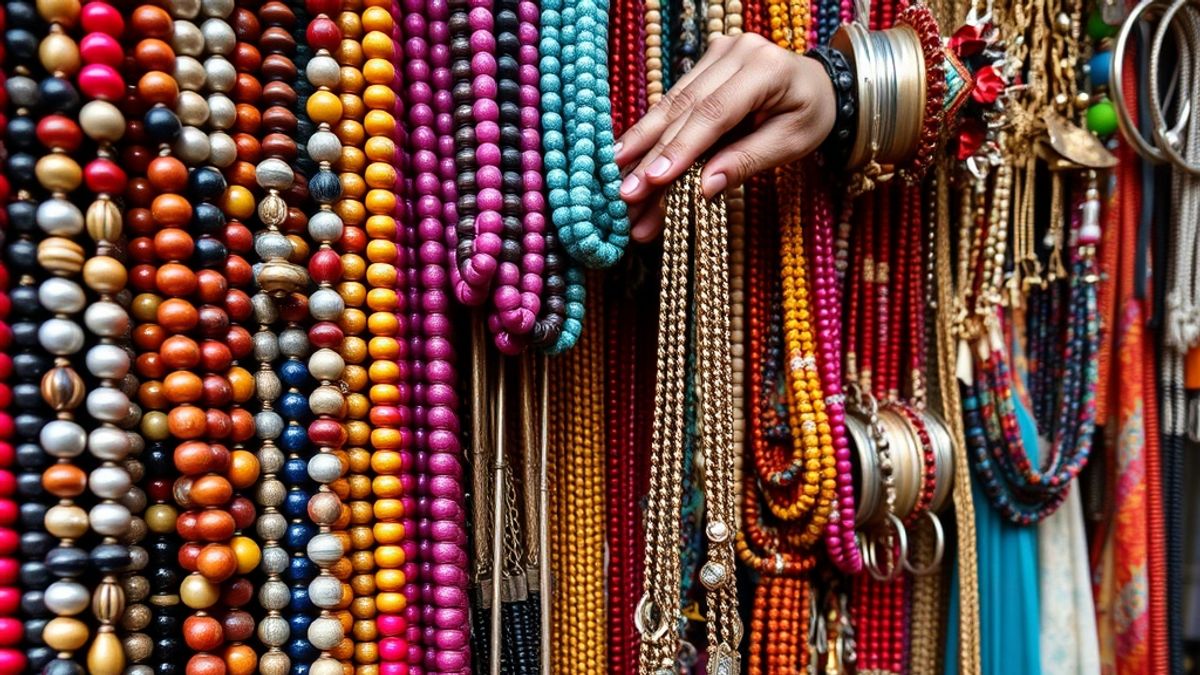
Photo: https://www.flickr.com/photos/ghoseb/ · CC BY-SA 2.0 · via Wikimedia Commons
Colaba Causeway is where most visitors do their first real bit of Mumbai shopping, and for good reason. It is one long, walkable street of stalls and shops running down from near the Gateway of India, selling exactly the sort of things you want to carry home — jewellery by the tray, cotton kurtas, cloth bags, brass curios and a whole pavement of cheap books. It is touristy, it is crowded, and the first price you hear is always a fiction. Shop it right, though, and it is genuinely good fun. Here is how a local approaches the street: what is actually worth buying, what a fair price looks like, how to bargain without turning it into a fight, and how to fold the shopping into a proper day around the southern tip of the city.
| Item | Indicative price, after bargaining | Best hunted at | Haggle room |
|---|---|---|---|
| Costume / junk jewellery | ₹100–400 a piece | Stall trays, mid-Causeway | High |
| Scarves & stoles | ₹200–500 each | Cloth stalls | High |
| Cotton kurtas & tops | ₹400–1,000 | Small shopfronts | Medium |
| Cloth & jhola bags | ₹250–700 | Stalls near the side lanes | High |
| Brass & wooden curios | ₹300–1,500+ | Fixed-price-ish shops | Low–medium |
| Pavement books | ₹100–400 | Booksellers on the footpath | Low |
| Souvenirs (magnets, postcards) | ₹30–200 | Everywhere | Medium |
Treat those numbers as a compass, not a rulebook. Prices swing with the quality of the piece, the time of day, how many you buy and how the seller reads you. The point of the table is simply to give you a floor and a ceiling, so that when you hear a “special price, just for you,” you already know whether it is actually special.
Getting your bearings
The stretch people mean when they say “Causeway” is Shahid Bhagat Singh Road, running roughly from the Regal Cinema circle down towards the quieter Colaba residential end. The heart of the shopping — the densest run of stalls and the loudest bargaining — sits in the upper third, nearer Regal and the Colaba Post Office. As you walk south the crowd thins, the stalls give way to more permanent shopfronts, and the whole street gets calmer.
It helps to understand the two kinds of seller you are dealing with, because they behave very differently:
- Pavement and pushcart stalls line the footpath under the arcades. This is where the theatre lives. Prices are elastic, everything is negotiable, and the same earrings appear on ten trays within fifty metres.
- Fixed shopfronts — curio dealers, cotton-clothing stores, the leather and bag shops — are set back under the buildings. Some have marked prices and little movement; others will still come down if you buy more than one thing.
Duck into the side lanes too. The parallel and cross streets often hold the small tailoring shops, the quieter curio dealers and a stall or two that the mid-afternoon crowd has not yet picked over. Colaba is compact and safe to wander, and getting a little lost here is part of the pleasure — for the wider lay of the land, the Colaba neighbourhood guide is worth reading before you come.
What to actually buy here
The Causeway’s strength is affordable, characterful, easy-to-pack stuff. It is not the place for big-ticket purchases or anything you need a warranty on. Play to its strengths and you will do very well.
Costume and junk jewellery
This is the single best-value category on the street, and the reason a lot of people come. Earrings, oxidised-silver-look pendants, layered necklaces, beads, cuffs and stacks of glass and metal bangles sit out by the tray. Post-bargain, simple earrings land around ₹100–300 a pair; statement pieces and heavier sets run higher. None of it is real silver or stone, so buy it as fashion rather than investment, and check clasps and hooks before you pay — the metal can be rough on sensitive ears. If you want the real thing in gold or genuine silver, that is a different trip altogether, up at the traditional jewellers of Zaveri Bazaar.
Bags, clutches and jholas
Embroidered and mirror-worked clutches, cloth sling bags, the classic block-printed jhola, and rack after rack of “inspired” totes. Cloth and jhola bags typically settle around ₹250–700 depending on the work. The embroidery and mirror pieces make excellent gifts and weigh almost nothing in a suitcase. Check the stitching on straps and zips before committing — this is fast-made stuff, and a strap that is going to fail will usually tell you so if you give it a firm tug.
Cotton clothing and scarves
Breezy kurtas, printed tops, harem and palazzo pants, wrap skirts, and a deep well of scarves and stoles. Cotton kurtas and tops sit roughly in the ₹400–1,000 band; light scarves and stoles go for ₹200–500 and are the easy, cheap, universally welcome souvenir. Sizing on street clothing is approximate and trial rooms are rare, so hold pieces against yourself, ask about returns before you pay (usually there are none), and when in doubt size up. For a bigger, trend-led clothing haul, the racks of Linking Road in Bandra go deeper on fashion.
Curios, brass and homeware
This is where the Causeway earns its “characterful” reputation: brass figurines and bells, little oil lamps and diyas, carved wooden boxes, inlay work, cushion covers, lampshades, small paintings and the odd bit of faux-antique. Curios run from around ₹300 for a small brass piece up past ₹1,500 for anything sizeable or detailed. These shops tend to be firmer on price than the jewellery stalls — the haggle room is real but narrower — so lean on buying two or three things together to move the number. If you catch the antiques bug properly, the dusty, genuinely old stuff lives at Chor Bazaar across town.
Pavement books
The Causeway’s booksellers spread an eclectic, cheap range straight onto the footpath — fiction, glossy coffee-table titles, city guides, the occasional out-of-print find. Expect roughly ₹100–400 depending on the book, with less bargaining headroom than the clothing stalls; the margins here are thin. It is a lovely, low-stakes browse and a good place to pick up something to read over coffee an hour later.
Souvenirs and gifts
Fridge magnets, postcards, small sculptures, keychains, printed tees, the entire tourist-gift range. Magnets and postcards are pocket change — ₹30–200 — and buying a handful from one seller gets you a better per-piece rate almost automatically. This is your quick, guilt-free stock-up for the people back home.
What to be sceptical about
For anything electronic, “branded” or expensive, treat the Causeway with real caution. The tech is not genuine, the “leather” may not be, and there is no recourse if it fails. If you actually want electronics, that is a job for Lamington Road; if you want a bargain-fashion strip with the same energy but a clearer price floor, Fashion Street on MG Road is the reference point. Keep the Causeway for jewellery, cotton, cloth bags, curios and gifts, and it rarely disappoints.
The art of bargaining
Bargaining on the Causeway is not optional; it is the game, and vendors set the first number expecting you to push back. If you pay the opening quote you have not been cheated exactly, but you have volunteered to overpay. A few principles carry almost every transaction.
Compare before you commit
Because the same earrings, scarves and magnets sit on a dozen stalls, do a quick loop before you buy anything you care about. Five minutes of walking tells you the real range for a piece, and once you know that range you negotiate from knowledge instead of hope. It also means that when a seller will not move, you can walk knowing the next tray has the same thing.
Open low, then meet in the middle
The quoted price is usually inflated, often heavily. Counter at roughly half — even 40 to 50 percent of the first number — and expect to settle somewhere between your figure and theirs. On junk jewellery and cloth bags the gap between opening quote and fair price is widest; on curios and books it is much tighter, so scale your counter to the category.
Be ready to walk
The single most powerful move on the street is turning to leave. Nine times out of ten you will be called back with a better price; the tenth time, the price was probably already fair and you have simply learned that. Walking away is not rude here — it is an accepted part of the choreography, and both sides know it.
Buy in bulk and stay friendly
Three scarves, four pairs of earrings or a stack of magnets from one stall gets you a far better per-piece rate than buying one of each from four stalls. And keep it light. This is theatre, not a quarrel — a smile, a bit of humour and a “last price?” delivered warmly will get you further than a scowl or a hard sell of your own. The sellers do this all day; matching their good humour is both more pleasant and more effective.
Timing, payment and practicalities
- Hours: stalls run roughly from mid-morning to about 10pm. Come in the morning for quieter lanes, easier bargaining, cooler air, and sellers who are fresh rather than worn down by a day of hagglers. Late evening is livelier as an atmosphere, but the crowds are thickest and the pavements tightest.
- Payment: street stalls are largely cash-first, though UPI is now widely accepted; established shops take cards. Carry a stack of small notes — ₹100 and ₹200 in particular. Change makes bargaining smoother, and “I only have this much” is a quietly effective closing line when it happens to be true.
- Season: October to March is the pleasant window, with dry days and bearable heat. Avoid peak-monsoon afternoons, when the street can flood and stalls board up under plastic; if you are here in the rains, the monsoon-in-Mumbai guide will help you time a run around the downpours.
- Getting there: Colaba has no railway station of its own — the nearest are Churchgate on the Western line and CSMT on the Central and Harbour lines, both a short taxi or bus ride away, with the local-train guide and the wider getting-around notes covering the how. Most people simply taxi in from South Mumbai or walk down from the Gateway.
- On the street: wear comfortable shoes, you will cover more ground than you expect. Keep bags zipped and worn in front of you in the crush, carry water, and be ready for persistent (though rarely aggressive) attention from sellers and the occasional balloon-and-trinket hawker.
Make a day of it
The Causeway sits in the middle of the city’s most postcard-perfect quarter, so the smart move is to treat the shopping as one thread in a wider Colaba wander rather than the whole outing.
Start at the Gateway and the seafront
Begin at the Gateway of India and the harbour front by the Taj for the classic photographs, ideally early, before the crowds and the heat build. From there it is a short, natural walk over to the top of the Causeway, so you arrive at the stalls with your bearings already set and the light still soft.
Break at a Colaba institution
Shop your way up the street, ducking into the side lanes, then stop at one of Colaba’s old cafés when your feet or your patience flag. Café Leopold, open since 1871, and Café Mondegar, famous for its Mario Miranda murals, are both a few steps off the Causeway and are as much sightseeing as refreshment — a cold drink, a plate of food, and a sit-down in a room with real history to it. For more options in the same walkable radius, the South Mumbai cafés guide has the fuller list.
Fold in the sights around it
Colaba rewards more than shopping. The grand stone architecture of nearby Fort and Kala Ghoda is an easy extension, the city’s best museums and art galleries — including the great domed CSMVS — are within walking distance, and the whole quarter is one long open-air lesson in Bombay Gothic and Art Deco if you follow a heritage architecture walk. If you have the morning free and a strong stomach for early starts, the working Sassoon Dock fish market nearby is a raw, fascinating pre-dawn scene — though it is about watching, not buying, and photography of the working dock can be restricted, so go with respect and a light touch.
How it compares to Mumbai’s other markets
The Causeway is the easiest street market for a first-timer, but it is not the cheapest or the most specialised, and knowing where it sits helps you decide how much to buy here versus save for elsewhere.
- For budget fashion at a clearer price floor, Fashion Street near CST and Linking Road in Bandra both go deeper on clothes and footwear, with the same bargaining culture.
- For everyday goods, spices and the great covered halls, Crawford Market is the historic, semi-wholesale experience.
- For antiques and curiosities with genuine age, Chor Bazaar is the real hunting ground.
- For gold, silver and bridal jewellery, Zaveri Bazaar is the trade centre, and the saree and wedding shopping guide covers the outfits to go with it.
- For air-conditioned, fixed-price comfort when the heat or the haggling wears thin, the city’s shopping malls are the fallback.
The Causeway’s edge over all of them is convenience and atmosphere: everything in one photogenic, walkable strip, wrapped around the Gateway, with cafés and sights built into the same afternoon.
The bottom line
Colaba Causeway is the friendliest, most enjoyable shopping street for a visitor to Mumbai — jewellery, cotton clothes, cloth bags, curios and gifts, all bargainable, all walkable, and all a short stroll from the Gateway of India. Come in the morning, do a quick comparison loop before you buy, open your counter-offers low, be genuinely willing to walk away, carry small notes, and keep the whole thing light. Skip the “branded” electronics, lean into the jewellery and the cloth, and build a café stop and a couple of sights into the day. Do that, and you will leave with a bag full of Mumbai — and probably a story about the one stallholder who talked you into buying rather more than you meant to.
Frequently Asked Questions
What can you buy on Colaba Causeway?
The Causeway is best for affordable, easy-to-pack pieces: costume and junk jewellery, cotton kurtas and scarves, embroidered cloth bags and clutches, brass and wooden curios, pavement books and the full range of souvenirs. It is not the place for genuine electronics, real gold or 'branded' goods, so treat anything expensive or high-tech with caution. Play to its strengths and you will do very well.
How much should you bargain on Colaba Causeway?
Bargaining is expected on the stalls, and the first price is usually inflated. Counter at roughly half the opening quote, even 40 to 50 percent, and settle somewhere in between, with the widest room on junk jewellery and cloth bags and much less on curios and books. Buying two or three pieces from one seller improves the rate, and a genuine willingness to walk away is your single strongest lever.
What time does Colaba Causeway open, and when is the best time to visit?
Stalls run roughly from mid-morning until about 10pm. Mornings are best for quieter lanes, cooler air and easier bargaining, while evenings are livelier but far more crowded. October to March is the pleasant season to visit; avoid peak-monsoon afternoons, when the street can flood and stalls board up under plastic.
Can you pay by card or UPI on Colaba Causeway, or do you need cash?
Street stalls are largely cash-first, though UPI is now widely accepted, and established shops take cards. Carry a stack of small notes, especially ₹100 and ₹200, because change keeps bargaining smooth and 'this is all I have' is a useful closing line. It is wise not to rely on card acceptance at the smaller trays and pushcarts.
How do you get to Colaba Causeway?
Colaba has no railway station of its own; the nearest are Churchgate on the Western line and CSMT on the Central and Harbour lines, both a short taxi or bus ride away. Most visitors simply take a taxi in from South Mumbai or walk down from the Gateway of India, which sits at the top of the shopping stretch. It is a compact, walkable quarter once you arrive.
Is Colaba Causeway cheaper than Fashion Street or Linking Road?
Not really. The Causeway is the most convenient and atmospheric street market, but Fashion Street near CST and Linking Road in Bandra often run cheaper and go deeper on clothes and footwear. What Colaba offers instead is variety in one photogenic strip: jewellery, curios, cloth bags and souvenirs, all wrapped around the Gateway with cafés and sights nearby. Shop the Causeway for character and gifts, and save the big clothing hauls for the dedicated fashion strips.