
Best Jain Food Restaurants in Mumbai
Where to eat honest Jain food in Mumbai: the best thalis, suburban strongholds, Jain pav bhaji, pizza, chaat and mithai — no onion, garlic or root veg.
'%3E%3Crect%20width%3D'96'%20height%3D'96'%20fill%3D'%23E65100'%2F%3E%3Ccircle%20cx%3D'30'%20cy%3D'24'%20r%3D'44'%20fill%3D'%23fff'%20opacity%3D'.12'%2F%3E%3Ccircle%20cx%3D'60'%20cy%3D'74'%20r%3D'40'%20fill%3D'%23000'%20opacity%3D'.10'%2F%3E%3C%2Fg%3E%3Cg%3E%3Ccircle%20cx%3D'48'%20cy%3D'48'%20r%3D'15'%20fill%3D'none'%20stroke%3D'%23fff'%20stroke-width%3D'3'%2F%3E%3Cpath%20fill%3D'%23fff'%20d%3D'M48%2037%20l3.5%2011%20-3.5%2011%20-3.5%20-11%20z'%2F%3E%3Ccircle%20cx%3D'48'%20cy%3D'48'%20r%3D'2.2'%20fill%3D'%23fff'%2F%3E%3C%2Fg%3E%3C%2Fsvg%3E)
Eating properly Jain in Mumbai should be the easiest thing in the world, and yet anyone who follows the diet knows the small anxieties that come with it: the kitchen that swears there’s “no onion” but slips in a garlic tadka at the last second, the potato hiding inside an otherwise innocent samosa, the “Jain” chaat that quietly arrives topped with ginger. Mumbai has one of the largest and most established Jain communities in India, which is both reassuring and a reason to stay alert — abundance doesn’t always translate into accuracy, and a busy kitchen on a Saturday night can forget your instructions in the rush.
The good news is that once you know where to point yourself, this is one of the most rewarding cities in the country for Jain food. Whole neighbourhoods run onion- and garlic-free by default; the unlimited Gujarati-Rajasthani thali is practically built for the diet; and the street-food economy has adapted so thoroughly that “Jain” is a printed menu option rather than a favour you have to beg for. What follows is a neighbourhood-by-neighbourhood guide to eating satisfying, honest Jain food across Mumbai — the kind where the kitchen genuinely understands that Jain means no onion, no garlic, and no root vegetables — along with realistic price bands and a handful of ordering habits that work anywhere in the city.
Here is the shape of it before we walk into the lanes:
| What you’re after | Best area to head for | Typical price | Best for |
|---|---|---|---|
| Unlimited Gujarati-Rajasthani thali | Kalbadevi, Vile Parle | ₹350–650 | A slow, satisfying feast |
| Casual chaat, dhokla & farsan | Ghatkopar, Vile Parle | ₹100–300 | Everyday snacking without worry |
| Jain pav bhaji | Ghatkopar, Vile Parle, Dadar | ₹120–250 | The classic Mumbai plate, done Jain |
| Jain pizza & fast food | Suburban outlets, college belts | ₹150–400 | Families, quick meals, kids |
| Mithai & farsan to carry home | Ghatkopar, Matunga, Dadar, SoBo markets | ₹400–900/kg | Gifts, festivals, travel |
| Reliable pure-veg sit-down | Fort, Churchgate | ₹250–500 | A safe corporate or tourist lunch |
What “Jain” actually means when you order
Before the restaurants, a quick refresher — because clarity here is the difference between a great meal and a spoiled one.
The non-negotiables
- No onion and no garlic. These are the big two, and they are absolute. If a dish arrives with either, it isn’t Jain, however good it looks.
- No root or underground vegetables: potato, sweet potato, carrot, beetroot, radish, turnip and yam. The logic is rooted in ahimsa — pulling up the whole root kills the plant and disturbs the many tiny organisms living in the soil around it.
The grey areas
- Ginger. Fresh ginger is an underground crop, so most strict kitchens leave it out; dry ginger powder (sonth) is accepted by some families and refused by others. Ask, don’t assume.
- Green leafy vegetables like spinach and fenugreek are avoided by many observant Jains, particularly during festival periods, though everyday practice varies household to household.
- Sprouted and fermented items and certain seeds carry their own rules for the very strict. Most restaurants won’t go that far, so if you follow those observances closely, you’ll be happier with a dedicated Jain kitchen or a home cook than with a general pure-veg place.
How to phrase your order
Don’t just say “Jain.” Say “Jain — no onion, no garlic, no potato, no ginger,” and if it matters to you, add “no green leaves.” Naming the items removes ambiguity, especially in a mixed kitchen where the person taking your order and the person at the stove are not the same. When in doubt, ask the one question that catches most mistakes: “Is there onion or garlic in the base gravy?” That single sentence has saved more Jain meals in this city than any menu ever printed.
Vile Parle, Ghatkopar and the Jain heartland suburbs
If you want the highest hit rate with the least explaining, head to the suburbs where the community is densest. In pockets of Vile Parle, Ghatkopar, Mulund and Borivali, a large share of eateries are either Jain by default or keep a fully separate Jain menu, and the staff have heard your order a thousand times.
Ghatkopar
Ghatkopar — the East side especially — is arguably Mumbai’s Jain food capital. The lanes off the station and the residential pockets around them are packed with pure-veg eateries, farsan shops, chaat carts and sweet marts where Jain is the norm rather than a special request. This is the place to go for casual chaat, piping-hot dhoklas and mithai without a second thought; if you only make one dedicated trip, make it here, and let our Ghatkopar food trail walk you down the specific lanes. Come hungry and graze — the whole point of Ghatkopar is that you can order almost anything on a stall without the usual interrogation.
Vile Parle
Vile Parle has a long tradition of Gujarati and Jain thali houses and farsan shops. Look for the classic thali institutions in the area — several have been feeding the community for decades and understand the diet instinctively, down to which farsan of the day is Jain-safe. It’s an easy, unglamorous, thoroughly dependable belt for both a big sit-down lunch and a bag of snacks on the way home.
Mulund and Borivali
Mulund and Borivali mirror the same pattern: dense residential Jain populations mean local farsan marts, undhiyu specialists in winter, and thali spots that need almost no explanation. Handy if you’re already in the central or far-western suburbs and don’t fancy a cross-city journey just to eat well.
Price band: casual snacks and farsan ₹100–300; a proper unlimited thali roughly ₹300–550 depending on the establishment. Tip: In these neighbourhoods, ask which places are a “pure Jain kitchen” versus “Jain on request.” A fully Jain kitchen won’t even keep onion or garlic on the premises — the single safest option you can choose.
Gujarati and Rajasthani thalis: the heart of Jain dining
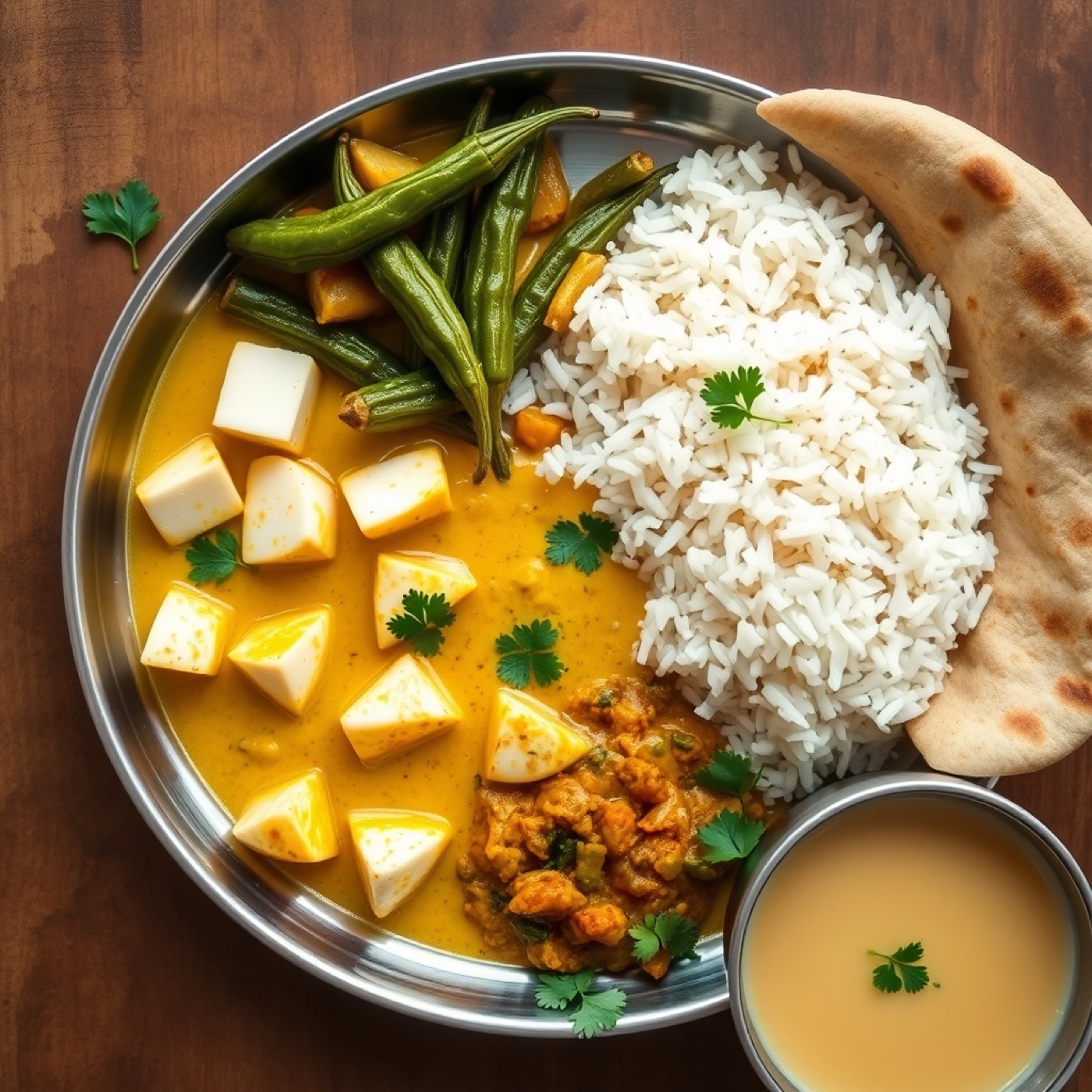
The unlimited Gujarati-Rajasthani thali is where Jain eaters truly win. These kitchens are built around the same flavour philosophy the diet demands — asafoetida (hing) doing the aromatic work that onion and garlic do elsewhere, a sweet-savoury balance, and an endless rotation of dals, kadhis, sabzis and farsan. If the thali is your main goal, our dedicated Gujarati thali guide goes deeper on the format and etiquette.
- Thakkar Bhojanalay (Kalbadevi) — a South Mumbai institution for old-school Gujarati thali. The style leans traditional and the staff are entirely used to Jain requests. Ideal for a heavy, deeply satisfying lunch when you’re already in the crowded market belt.
- Shree Thaker Bhojanalay (Kalbadevi) — another beloved name in the same district, famous for an elaborate, seasonal, home-style spread. Reserve or arrive early; it fills up fast, especially at weekend lunch.
- Rajdhani Thali (multiple malls and locations) — the reliable, polished chain. It isn’t the cheapest, but the service model suits Jain diners beautifully: tell the captain you’re eating Jain and they’ll route the right dishes to your plate. A safe bet for families and out-of-towners.
- Panchvati Gaurav and the Vile Parle thali houses — dependable spots in the western suburbs for an unlimited spread with clear, unfussy Jain handling.
For something more upmarket — an anniversary, a family celebration — the city’s vegetarian fine-dining rooms will almost always cook Jain on request; simply call a day ahead so the kitchen can plan the base gravies.
Price band: ₹350–650 for an unlimited thali, higher in the premium chains and hotel restaurants. When to go: Lunch is when thali kitchens are freshest and fastest. Weekday afternoons comfortably beat the weekend rush. What to order: Start light — the rotis, dal, kadhi and the farsan of the day — because the thali is unlimited and the second round always sneaks up on you. In winter (roughly December to February), ask whether they have undhiyu made Jain-style; the classic version leans heavily on root vegetables, so a proper Jain undhiyu is a genuine treat when a kitchen bothers to make one.
South Mumbai: markets, sweets and reliable veg
South Mumbai’s dense Gujarati-Marwari trading pockets — Kalbadevi, Bhuleshwar, Zaveri Bazaar and Marine Lines — are a goldmine for Jain eaters, especially at lunch and for anything you want to carry home.
- Bhuleshwar and Kalbadevi lanes are full of farsan shops and small bhojanalays where Jain is simply business as usual. This is the belt for authentic khakhra, thepla, fresh farsan and mithai, and a natural lunch stop if you’re already threading through Crawford Market or the jewellery lanes of Zaveri Bazaar.
- Chowpatty and Marine Lines hold the famous chaat and sweet houses. The legacy sweet brands here handle Jain versions of many snacks, and the street-food scene is more Jain-friendly than most, but always confirm the specific item before you commit.
- For a proper sit-down meal in the Fort / Churchgate area, the established pure-veg restaurants are used to the corporate Jain lunch crowd — a far safer bet than a random multi-cuisine place that cooks everything from one onion-heavy base gravy.
Price band: street snacks and farsan ₹50–200; sit-down veg meals ₹250–500. Tip: In the markets, buy farsan and mithai to take home — khakhra, mathiya, chorafali and dry snacks travel beautifully and are almost always Jain-friendly.
Jain fast food, pizza and street eats
Here is the part outsiders underestimate: Mumbai does Jain fast food better than almost anywhere on earth. Because demand is so high, mainstream chains and street vendors run real Jain menus rather than token gestures.
Jain pav bhaji
A genuine Mumbai speciality, and the plate that best shows how seriously the city takes the diet. Regular pav bhaji is built on a mashed-potato base with plenty of onion and garlic; a proper Jain version swaps the potato for raw banana or bottle gourd and drops the onion-garlic entirely. The flavour comes out milder, but the texture stays close when the cook knows what they’re doing. Look for the dedicated pav bhaji stalls in Ghatkopar, Vile Parle and Dadar that advertise a Jain option — the good ones nail it.
Jain pizza
Most major pizza outlets in Mumbai will make a Jain version without onion or garlic, using paneer, corn and capsicum in place of anything root-based. Independent pizzerias in the suburbs often do it best, since they’re cooking each pizza to order rather than assembling from a fixed set of pre-cut toppings.
Sandwiches, frankies and chaat
Vendors around CST, Churchgate and the college areas commonly do Jain frankies and rolls, building them from cheese-and-vegetable fillings without onion or potato. Chaat is naturally close to Jain to begin with — sev puri, dahi puri and pani puri need only two adjustments — so ask for no potato and no onion, and a good chaatwala will lean on extra sev, moong or raw banana instead. The stalls at Juhu beach and the Girgaon khau galli are both used to the request.
One honest caveat: the classic Mumbai vada is a potato fritter, so a standard vada pav can’t be made Jain without a different filling. A handful of stalls do a raw-banana vada, but don’t assume — our vada pav trail is best treated as a pleasure for the non-Jain members of the family.
Price band: ₹60–250 for most fast-food and street items. Tip: On the street, watch the tawa. If the vendor cooks Jain and non-Jain on the same surface, ask for a fresh corner or a wipe-down — residual garlic butter is the usual culprit, and it’s an easy thing to request politely.
Sweets and farsan to take home
No Jain food guide to Mumbai is complete without mithai. The city’s legacy sweet houses — the big names you’ll see across Ghatkopar, Matunga, Dadar, Vile Parle and the SoBo markets — produce a wide range of Jain-safe sweets, and our desserts and mithai guide maps the best of them.
- Safe bets: most mysore pak, mohanthal, ghari, kaju katli, pedas, barfis and jalebis are made without onion-garlic and without root vegetables — naturally Jain.
- Farsan: khakhra, thepla, chorafali, mathiya, sev, gathiya and fafda are staples; just confirm there’s no garlic in the masala coatings.
- Ask about: anything with a “special” chutney or filling, and seasonal items — a few use ingredients that aren’t strictly Jain, and the shop won’t always volunteer it.
Price band: ₹400–900 per kg for premium mithai; farsan typically ₹300–600 per kg.
Eating Jain during Paryushan and festival season
Paryushan, the most important Jain festival period, usually falls in August–September, and it changes the city’s food map for the better. Many sweet houses and restaurants in Jain areas roll out dedicated menus that go further than usual — dropping green leafy vegetables entirely and, in the strictest kitchens, cooking so that meals can be finished before sunset. It’s arguably the best window of the year to eat the most authentic, most carefully cooked Jain food in Mumbai, but demand spikes sharply, so book ahead wherever you can.
If getting out is difficult during those days — or any time you simply want reliable Jain food at home — the city’s home chefs and tiffin services ramp up their Jain offerings, and a good tiffin is often stricter and more consistent than a restaurant kitchen under pressure.
How to order Jain confidently anywhere in Mumbai
Even well outside the Jain strongholds, you can eat well with a little strategy:
- Lead with a pure-veg kitchen. A restaurant that already keeps no meat is far more likely to handle Jain correctly than a multi-cuisine place juggling a dozen gravies.
- Name the forbidden items, don’t just say “Jain.” “No onion, no garlic, no potato, no ginger” leaves nothing to interpretation.
- Prefer dishes cooked to order. A fresh sabzi or a made-from-scratch pizza is safer than anything built on a pre-prepared base gravy that already contains onion.
- Ask about the gravy base and the tadka. These are where onion, garlic and ginger hide most often, and one direct question flushes them out.
- Watch shared surfaces at street stalls and dosa counters — request a clean tawa or a fresh corner.
- Use the community. In dense Jain neighbourhoods, locals will happily point you to the fully Jain kitchen around the corner; it’s usually the best meal on the street anyway.
The practical wrap-up
Mumbai rewards Jain eaters more generously than almost any city in India — you just need to know where to point yourself. For guaranteed peace of mind, base yourself around the suburban strongholds of Ghatkopar, Vile Parle, Mulund and Borivali, where entire kitchens run onion- and garlic-free. For a proper sit-down feast, book a Gujarati-Rajasthani thali at lunch. For quick eats, lean on Jain pav bhaji, Jain pizza and the naturally friendly chaats, always confirming no potato and no onion. And for the road home, load up on farsan and mithai from the legacy sweet houses. Order clearly, favour pure-veg and cooked-to-order dishes, and this city will feed you exceptionally well — no root vegetables required.
Frequently Asked Questions
What does 'Jain food' mean — what can't you eat?
Jain food is vegetarian food cooked without onion, garlic or any root and underground vegetable, so no potato, sweet potato, carrot, beetroot, radish or (in strict kitchens) fresh ginger. The reasoning is rooted in ahimsa: uprooting the whole plant, and disturbing the tiny organisms living in the soil, is avoided. Many observant Jains also skip green leafy vegetables during festival periods, though everyday practice varies from family to family.
Which area of Mumbai is best for Jain food?
Ghatkopar, especially the East side, is widely considered Mumbai's Jain food capital, with lanes full of pure-veg eateries, farsan shops and sweet marts where Jain is the default rather than a special request. Vile Parle, Mulund and Borivali follow close behind thanks to dense Jain populations and long-running thali houses. In South Mumbai, the Kalbadevi and Bhuleshwar market belt is the go-to for thalis, farsan and mithai.
Is Jain pav bhaji actually different from regular pav bhaji?
Yes, quite a bit. Regular pav bhaji is built on a mashed-potato base with onion and garlic, none of which are allowed in Jain cooking. A proper Jain version swaps the potato for raw banana or bottle gourd and drops the onion-garlic entirely, so the flavour is milder but the texture stays close when the cook knows what they are doing. Ask the stall to use a clean corner of the tawa, since leftover garlic butter is the most common slip.
Can I get Jain pizza and fast food in Mumbai?
Easily — demand is high enough that most major pizza chains and many independent pizzerias offer a genuine Jain option, using paneer, corn and capsicum instead of anything onion-, garlic- or root-based. Jain sandwiches, frankies and chaat are also widely available, especially around college areas and railway stations. Always name the forbidden items when ordering rather than just saying 'Jain', and ask them to skip potato in chaat.
How do I make sure a restaurant really cooks Jain and doesn't sneak in onion or garlic?
Start with a pure-veg kitchen, which is far more likely to handle the diet correctly, and prefer dishes cooked to order over anything sitting in a pre-made base gravy. Spell out 'no onion, no garlic, no potato, no ginger' instead of just saying 'Jain', and specifically ask whether the base gravy and tadka contain onion or garlic, since that is where they hide. In dense Jain neighbourhoods, ask locals to point you to a 'pure Jain kitchen' that keeps no onion or garlic on the premises at all.
When is Paryushan and does it change where I can eat?
Paryushan is the main Jain festival period, usually falling in August or September. During these days many restaurants and sweet houses in Jain areas roll out dedicated menus that also drop green leafy vegetables, and some adjust timings so meals finish before sunset. It is one of the best windows to eat the most authentic Jain cooking, but book ahead because demand spikes sharply.