
Best Budget Hotels & Places to Stay in Mumbai
Where to find clean, safe, affordable stays in Mumbai — honest ₹ price bands and area-by-area tips for Colaba, Andheri, the airport and Bandra.
'%3E%3Crect%20width%3D'96'%20height%3D'96'%20fill%3D'%23B3261E'%2F%3E%3Ccircle%20cx%3D'30'%20cy%3D'24'%20r%3D'44'%20fill%3D'%23fff'%20opacity%3D'.12'%2F%3E%3Ccircle%20cx%3D'60'%20cy%3D'74'%20r%3D'40'%20fill%3D'%23000'%20opacity%3D'.10'%2F%3E%3C%2Fg%3E%3Cg%20fill%3D'%23fff'%3E%3Crect%20x%3D'29'%20y%3D'49'%20width%3D'8'%20height%3D'19'%20rx%3D'1'%2F%3E%3Crect%20x%3D'39'%20y%3D'40'%20width%3D'9'%20height%3D'28'%20rx%3D'1'%2F%3E%3Crect%20x%3D'50'%20y%3D'45'%20width%3D'8'%20height%3D'23'%20rx%3D'1'%2F%3E%3Crect%20x%3D'60'%20y%3D'53'%20width%3D'7'%20height%3D'15'%20rx%3D'1'%2F%3E%3Crect%20x%3D'41'%20y%3D'34'%20width%3D'5'%20height%3D'6'%2F%3E%3C%2Fg%3E%3C%2Fsvg%3E)
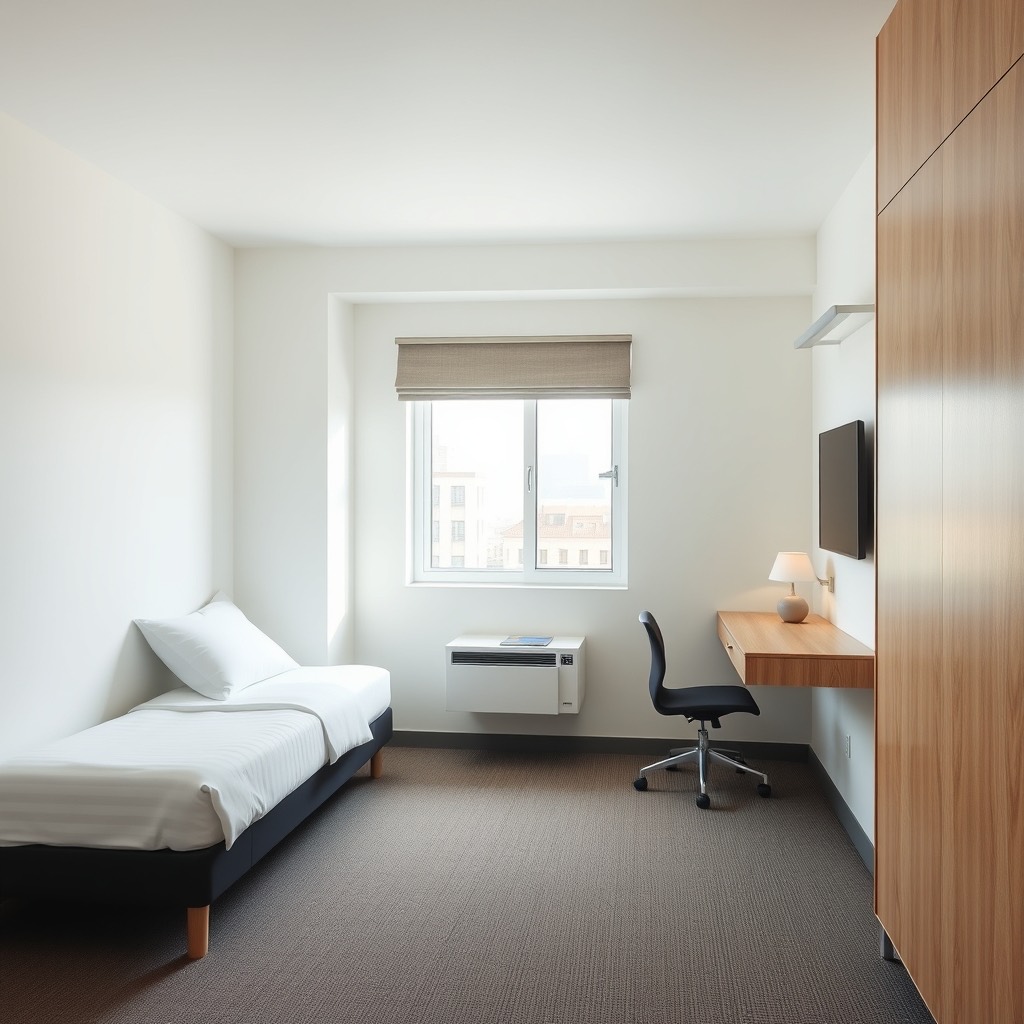
Mumbai has a reputation for being expensive, and it earns it. A sea-view room on Marine Drive can cost more for one night than a month’s rent used to in the suburbs. But the city has always made room for people arriving with a single suitcase and a tight budget — students sitting entrance exams, job-seekers seeing the place for the first time, backpackers on a long India loop, families in town for a cousin’s wedding. If you know which pockets of the city to look in, you can find a clean bed, a working fan or AC, a hot shower and a door that locks, for a fraction of what the five-stars charge.
This guide walks you through the neighbourhoods where budget stays actually make sense, what your money realistically buys in each, the difference between a hostel dorm and a “budget hotel,” and the practical things nobody tells you until you have already checked in and found the AC only runs after 10 p.m.
Budget stays at a glance
Use this as a rough map, not a price list. Rates shift with the season, the day of the week and whatever is happening in town, so treat every band as a starting point and confirm before you book.
| Area | Double AC room (typical) | Hostel dorm bed | Best for | Keep in mind |
|---|---|---|---|---|
| Colaba / Fort (South Mumbai) | ₹2,500–4,500 | ₹600–1,200 | First-timers, sightseeing on foot | Rooms are old and small; book ahead in season |
| Andheri (East & West) | ₹2,000–4,000 | ₹700–1,300 | Airport access, transport links, families | Function over romance |
| Airport belt (Sahar / Vile Parle) | ₹3,500–6,000 | ₹800–1,400 | Late arrivals and early flights | Road noise; confirm the pickup |
| Bandra | ₹3,500–6,000+ | ₹900–1,500 | Cafes, the sea, a younger crowd | Few genuinely cheap private rooms |
| Dadar / Matunga (central) | ₹2,500–4,500 | Limited | Rail access on both lines, thali food | Busy, functional, few hostels |
First, what “budget” actually buys you
Prices in Mumbai move with the season, the day of the week, and whether there is a big event, exam or festival in town. As a general map, here is what different budgets tend to get you:
- Hostel dorm bed: roughly ₹600–1,200 a night, usually with a locker, a common area and sometimes a travel desk
- Basic private room (fan, shared or a small attached bath): roughly ₹1,200–2,500
- Decent budget hotel room with AC: roughly ₹2,500–4,500
- Clean mid-budget room near the airport: roughly ₹3,500–6,000
Rates climb during wedding season (roughly November to February, when the weather is also at its kindest) and around big festivals like Ganesh Chaturthi and Diwali. They soften in the monsoon months of June to September, which is the quietest — and cheapest — time to visit if you do not mind the rain. If you are weighing that trade-off, our guide to the Mumbai monsoon is honest about what the season is really like.
One thing to build into your maths: the quoted rate is often not the final rate. Rooms below about ₹1,000 a night are usually GST-free, but above that a tax is added on top, and the tier rises again for pricier rooms. A “₹2,800” room can settle nearer ₹3,200 once tax lands. Always ask whether the price you have been given is inclusive, and whether breakfast, if mentioned, is actually included or an add-on.
South Mumbai: Colaba, Fort and CST
This is the heart of old Mumbai and, for a first-time visitor, the most rewarding place to be based. You are within walking distance of the Gateway of India, the Kala Ghoda art district, the grand Chhatrapati Shivaji Maharaj Terminus (still called CST or VT by everyone), and most of the city’s museums and galleries. It is also where Mumbai’s oldest cluster of budget guesthouses sits, some of them hosting shoestring travellers since long before “backpacking India” was a phrase.
What to expect
Colaba is backpacker territory. The lanes behind the Taj and around Colaba Causeway are dotted with guesthouses that trade almost entirely on location. Rooms here run small and old, ceilings are high, fans are ancient, and the walls can be thin; the cheapest rooms may share a bathroom down the corridor. What you are paying for is the postcode — you can walk out of the door into the best of tourist Mumbai. Fort, just to the north, is quieter and more office-and-heritage than backpacker, with a handful of tidy, business-style budget hotels tucked among the old stone buildings.
- Dorm and hostel beds are widely available in Colaba, usually with a common lounge and a notice-board culture of shared taxis and day trips
- Private rooms here reward you with character rather than polish — expect quirks, and expect to look past them
- Book ahead in peak season; the genuine good-value places are a small, well-known set and they fill fast
Getting there and getting around
CST is a major suburban rail hub and the terminus for many long-distance trains, so arriving into South Mumbai by rail is straightforward. From the airport, a prepaid or app cab takes anywhere from 45 minutes to well over an hour depending on traffic — our rundown of airport-to-city transport covers the realistic options and costs. Once you are in South Mumbai you can walk most of the tourist circuit, and the iconic black-and-yellow taxis are everywhere. Note that autorickshaws are not allowed south of roughly Bandra/Mahim, so down here it is taxis on foot, not autos.
Tips
- Eat where the office crowd eats. Fort has legendary Irani cafes — order a bun maska with chai, or keema pav, and you will spend very little; the Fort lunch trail is a cheap, delicious way to fill a day.
- Colaba Causeway is a browsing bazaar. Bargain hard, and keep a hand on your bag in the crowds.
- Ask to see the room before you pay. Two rooms at the same guesthouse can be wildly different, and the one they show first is not always the one you will be given.
Andheri: the practical middle ground
If South Mumbai is about romance and history, Andheri is about getting things done. It sits in the western suburbs, close to the airport, superbly connected by the local train (both the Western and Harbour lines) and the Metro, and packed with the kind of mid-range and budget hotels built for business travellers and visiting families. It is not pretty, but it is efficient, and for many trips that is the more valuable quality.
What to expect
Andheri East, near the airport and the MIDC and SEEPZ business areas, has the biggest concentration of clean, no-nonsense budget and mid-budget hotels — the sort with reliable AC, a working lift, room service and a proper 24-hour front desk. Andheri West is livelier and more social, closer to cafes, cinemas and the nightlife of the western suburbs, and a shorter hop to the beach at Versova. Our full Andheri neighbourhood guide breaks down the east-west split in more detail.
- Budget branded hotels and serviced rooms are plentiful, consistent and easy to book online well in advance
- Best for travellers who value predictability over character — you know exactly what you are getting
- Value sweet spot: clean AC doubles at the lower end of the mid-budget band that still leave money for the rest of the trip
Getting there and getting around
Andheri station is one of the city’s key interchanges — Western Railway, the Harbour line and the Metro all meet here — which makes it a superb base for exploring both the suburbs and heading south into town. Learning the local train even a little transforms your trip: it is faster than any cab at rush hour and costs a fraction as much. The airport is a short ride away. Use app cabs or autos for shorter hops; autos are allowed throughout the suburbs, which keeps local travel cheap. For the bigger picture, our guide to getting around Mumbai is worth a read before you arrive.
Tips
- Stay near Andheri station or a Metro stop if you plan to move around a lot. Fifteen minutes saved on every trip adds up over a few days.
- Andheri West’s Lokhandwala and Versova areas are excellent for cheap, high-quality food, from street chaat to fresh seafood.
- If you have an early flight, Andheri East is the smart, low-stress choice — you are minutes from the terminals without paying full airport-hotel prices.
Near the airport: for late arrivals and early flights
Mumbai’s international (T2) and domestic (T1) terminals sit close together in the Andheri–Sahar–Vile Parle belt, and the surrounding lanes are full of stays built specifically around flight schedules. If your trip is really about the plane — a red-eye landing, a dawn departure, a long layover — this is where to be. We keep a dedicated list of hotels near Mumbai airport if you want to go straight to options.
What to expect
The airport-adjacent budget market splits into two. On one side are cheerful hostels and guesthouses aimed at transit travellers, offering dorm beds and simple private rooms, often with a free or cheap shuttle. On the other are slightly pricier mid-budget hotels that lean on airport pickup and genuine 24-hour check-in. Because so many guests arrive at odd hours, round-the-clock reception is common here — a real relief at 2 a.m. with a suitcase and no plan.
- Hostels: dorm beds and basic privates, frequently with an airport shuttle worth confirming in advance
- Mid-budget hotels: AC rooms, breakfast, and the reassurance of a staffed desk through the night
- Watch for rooms facing busy roads — they can be noisy at all hours; ask specifically for a quieter interior-facing side
Getting there and getting around
This is the whole point: you are minutes from the terminals. Confirm whether your stay offers a pickup and get the driver’s number in advance, because signage around the airport perimeter is confusing after dark. If you are relying on an app cab, note that both terminals have designated pickup zones that can add a short walk from the arrivals door — factor that in if you are tired or carrying a lot.
Tips
- If your layover is short, pay a little more for somewhere within a ten-minute drive rather than chasing the absolute cheapest bed two suburbs away. Sleep beats savings when the alarm is set for 4 a.m.
- Keep some cash for the auto or taxi. Not every short-hop driver is keen on digital payment late at night, and a working local number helps — see our note on buying a SIM card in Mumbai if you have just landed.
- Vile Parle nearby is a food-lover’s neighbourhood — hunt down a classic vada pav (the vada pav trail will point you the right way) or a proper South Indian breakfast before you fly.
Bandra: style on a semi-budget
Bandra is Mumbai’s most fashionable suburb — sea-facing promenades, street art, indie cafes, boutiques and a genuine, restless buzz. It is not a cheap area, and there is no pretending otherwise, but it has enough hostels and smaller guesthouses that a budget traveller can still get a foothold, especially anyone happy to sleep in a dorm.
What to expect
Pure budget hotels are thinner on the ground in Bandra than in Andheri, and private rooms cost more here than they would a few stations north for the same square footage. What Bandra offers instead is a growing crop of well-run, design-conscious hostels with good common spaces, plus the intangible value of staying somewhere you genuinely want to spend your evenings. Our Bandra neighbourhood guide captures why people fall for the place.
- Hostels are your best budget bet in Bandra — social, often stylish, and priced within reach
- Private budget rooms exist but carry a clear premium for the postcode
- Best for younger travellers who want atmosphere over space and do not mind sharing
Getting there and getting around
Bandra is on the Western line and linked to South Mumbai by the Bandra–Worli Sea Link, a fast and scenic ride when traffic cooperates. Sitting roughly midway between the airport and town makes it a flexible base for a trip that mixes sightseeing with suburban life.
Tips
- Walk the Bandstand and Carter Road promenades in the evening — free, breezy, and full of life, with the sea on one side and the city out for its stroll on the other.
- Linking Road and Hill Road are the neighbourhood’s famous street-shopping strips; bargain and browse.
- Cafes here run from cheap to splurge. You can eat and drink well without overspending if you pick carefully and skip the most Instagrammed corners.
Other pockets worth knowing
Beyond the big four, a couple of central areas quietly solve specific problems. Dadar, bang in the middle of the city, is a rail super-hub where the Western and Central lines cross — invaluable if your plans pull you in several directions, and surrounded by no-frills hotels and superb Maharashtrian food. Neighbouring Matunga is calmer and famous for its South Indian breakfasts, worth a detour whether or not you stay (the Matunga food trail is a joy). Marine Lines and Grant Road, on the southern spine, offer older budget hotels within striking distance of both CST and the sights, often a touch cheaper than Colaba proper.
For longer stays, do the sums differently. A week or more can tip the balance toward a service apartment with a kitchenette, where cooking a few meals offsets the nightly rate. Families travelling together often find better value in a family-friendly hotel with a triple room or connecting doors than in two budget singles. And if the trip is really a month-plus relocation, it is worth reading how renting a flat in Mumbai works before you commit to hotels at all.
When budget is not quite the point
It is worth being honest with yourself about what the stay is for. If the room is only ever a place to shower and sleep between long days out, spend as little as you comfortably can and put the difference into food and travel. But if the view or the setting is part of the holiday, a modest step up can be money well spent: a sea-view hotel for a couple of nights, or one of the city’s boutique and heritage hotels for a taste of old Bombay, sits just above true budget and can be the memory you keep. Mumbai’s luxury hotels are a different world again — useful to know the ladder exists even if you only climb one rung of it. If you are torn between areas, our broader where to stay in Mumbai guide lays out the trade-offs by trip type.
Booking smart: timing, taxes and reading a listing
A budget room is only a bargain if it delivers what it promised. A few habits protect you:
- Book the first night or two before you arrive, especially for a late landing, then decide in person whether to extend. That gives you a guaranteed bed without locking you into a place you have not seen.
- Read the recent reviews, not the rating. Skim for the words “clean,” “staff,” “noise” and “AC.” A three-star average with warm, specific recent reviews beats a four-star average that stopped updating a year ago.
- Confirm what the price includes. “AC room” does not always mean the AC runs all night — some places switch it to timed hours to save power. Ask directly, and ask whether tax is on top of the quoted rate.
- Check the cancellation terms. Monsoon plans change; a free-cancellation rate is worth a few rupees more for the flexibility.
Safety and comfort notes for every area
A few things hold true whichever neighbourhood you choose:
- Look for reviews that mention cleanliness and staff, not just price. A cheap room with a helpful, honest front desk is worth more than a slightly cheaper one without.
- Women travelling solo will find hostels with female-only dorms and 24-hour reception widely available and a sensible default. Trust your read on a place before you hand over money; if the entrance or the corridor feels wrong, walk on.
- Carry a copy of your ID. Hotels are legally required to register every guest, so keep your identification handy at check-in; foreign visitors should have their passport and visa page ready.
- Mind your valuables. Use the locker in a dorm and do not leave a laptop on show in a shared space. Basic city sense, nothing more.
- Monsoon reality: between June and September, prices drop but so does the ceiling on comfort. Streets waterlog fast, short walks turn into adventures, and low-lying areas flood; pack for rain, keep documents in a plastic sleeve, and build slack into your timings.
Eating and exploring cheap wherever you land
The great equaliser in Mumbai is the food: some of the best things you will eat cost less than a coffee back home. Wherever your budget bed ends up, you are rarely far from a legendary street-food corner or a budget eats haunt where a full meal runs to a few hundred rupees at most. The same thrift extends to the sightseeing — a huge share of Mumbai’s best things to do are free or nearly so: the seafront promenades at dusk, the heritage streets of Fort, the markets, the temples, the simple act of riding a local train through the city. A budget trip here is not a compromised one.
Choosing your base
Match the neighbourhood to the trip. If you are here to see the sights and soak up old Mumbai, base yourself in Colaba or Fort and walk. If you want convenience, transport links and predictable rooms, Andheri is hard to beat, and doubly so for families. If it is all about a flight, stay near the airport and sleep easy. If you want to feel the pulse of the city’s cool side and do not mind a dorm, Bandra rewards you. And if you need to be everywhere at once, Dadar’s rail connections quietly earn their keep.
Whatever you pick, book the first night or two in advance, arrive with a rough idea of the fare to your door, and never be shy about asking to see the room first. Mumbai looks after people who plan a little — and a good, honest budget bed here comes with something no five-star can sell you: a front-row seat to the most alive city in India.
Frequently Asked Questions
How much does a budget hotel room cost in Mumbai?
As a rough map, a hostel dorm bed runs about ₹600–1,200 a night, a basic private room around ₹1,200–2,500, and a decent AC budget-hotel double roughly ₹2,500–4,500. Clean mid-budget rooms near the airport sit around ₹3,500–6,000. Remember that rooms above about ₹1,000 usually add GST on top of the quoted rate, so ask whether the price you are given is inclusive before you book.
Which area of Mumbai is best for budget travellers?
It depends on your trip. Colaba and Fort in South Mumbai are best for first-timers who want to sightsee on foot, with the city's oldest cluster of cheap guesthouses. Andheri offers the best value plus airport and train links, making it ideal for families and longer stays. Stay near the airport belt for late arrivals or early flights, and pick Bandra if you want cafes, the sea and a younger crowd and don't mind a dorm.
When is the cheapest time to find hotels in Mumbai?
The monsoon months of June to September are the quietest and cheapest, since fewer visitors come during the rains. Prices climb during wedding season, roughly November to February, when the weather is at its best, and around big festivals like Ganesh Chaturthi and Diwali. If you can tolerate wet streets and the occasional waterlogged walk, a monsoon trip can save you a meaningful amount on the same room.
Is it safe to stay in a budget hotel or hostel in Mumbai?
Yes, budget stays in Mumbai are generally safe, but choose on reviews rather than price alone, looking for mentions of cleanliness, helpful staff and 24-hour reception. Solo women travellers will find female-only dorms widely available and should trust their read on a place before paying. Carry a copy of your ID, since hotels are legally required to register every guest, and use lockers for valuables in shared dorms.
Should I stay near Mumbai airport for an early flight?
If your trip is mainly about the plane — a late-night landing, a dawn departure or a long layover — staying in the Sahar–Vile Parle airport belt is the smart, low-stress choice, since many stays there offer 24-hour check-in and airport pickup. For a short layover, pay a little more for somewhere within a ten-minute drive rather than the absolute cheapest bed further out. Confirm any shuttle in advance and ask for a quieter, interior-facing room to avoid road noise.
Do budget hotels in Mumbai have air conditioning that runs all night?
Not always, so ask directly before booking. Some budget hotels switch the AC to timed hours to save on power, meaning an 'AC room' may not stay cool through the night. Confirm whether the AC runs continuously, whether tax is added on top of the quoted rate, and whether any mentioned breakfast is included or an extra. Reading recent reviews for the words 'AC' and 'noise' will usually tell you what to expect.