
Hidden Gems of Mumbai Most Tourists Miss
A local's guide to Mumbai's hidden gems: quiet heritage lanes, secret shrines, offbeat viewpoints, birding hides and old Irani cafes most tourists miss.
'%3E%3Crect%20width%3D'96'%20height%3D'96'%20fill%3D'%23E65100'%2F%3E%3Ccircle%20cx%3D'30'%20cy%3D'24'%20r%3D'44'%20fill%3D'%23fff'%20opacity%3D'.12'%2F%3E%3Ccircle%20cx%3D'60'%20cy%3D'74'%20r%3D'40'%20fill%3D'%23000'%20opacity%3D'.10'%2F%3E%3C%2Fg%3E%3Cg%3E%3Ccircle%20cx%3D'48'%20cy%3D'48'%20r%3D'15'%20fill%3D'none'%20stroke%3D'%23fff'%20stroke-width%3D'3'%2F%3E%3Cpath%20fill%3D'%23fff'%20d%3D'M48%2037%20l3.5%2011%20-3.5%2011%20-3.5%20-11%20z'%2F%3E%3Ccircle%20cx%3D'48'%20cy%3D'48'%20r%3D'2.2'%20fill%3D'%23fff'%2F%3E%3C%2Fg%3E%3C%2Fsvg%3E)
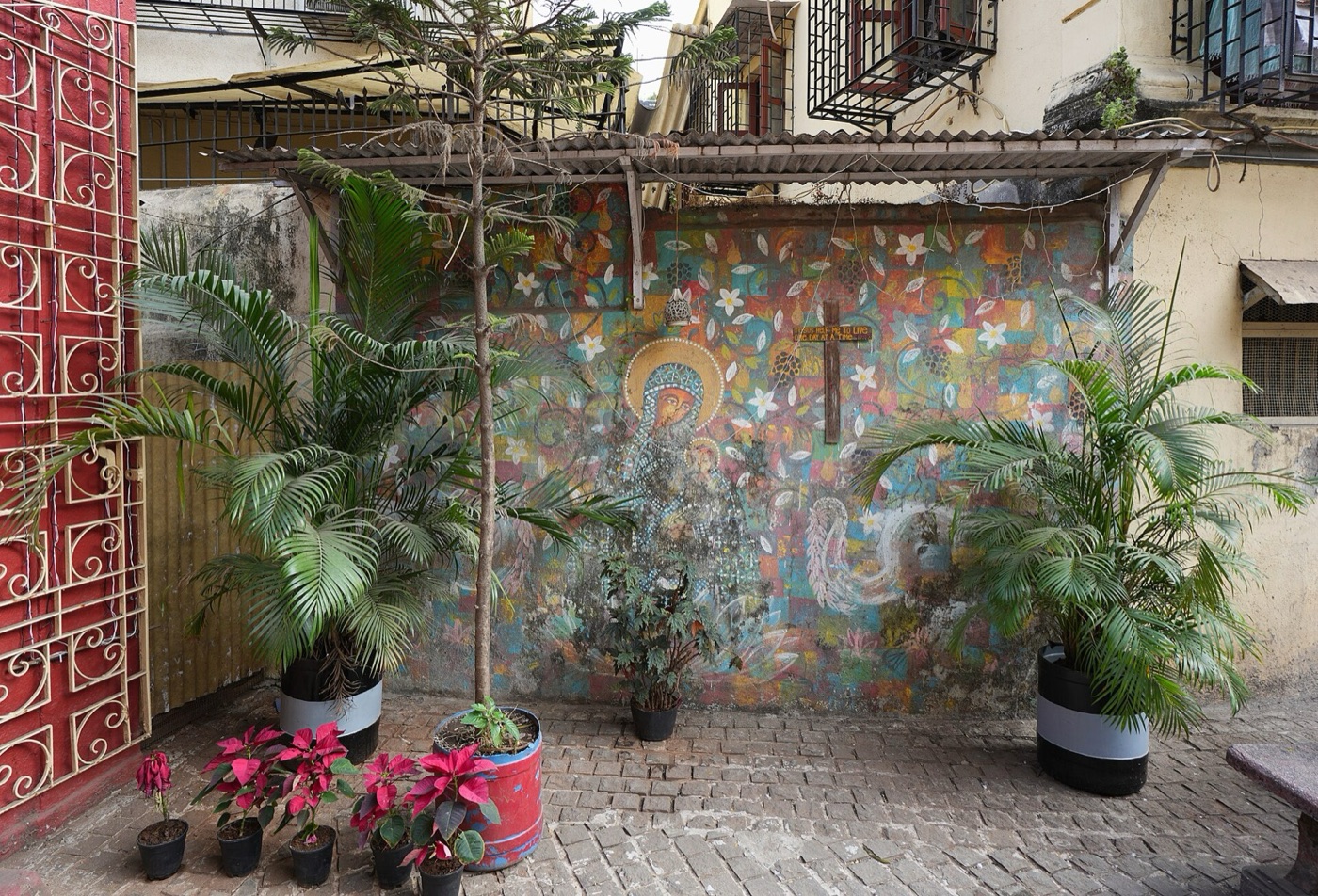
Photo: Ingo Mehling · CC BY-SA 4.0 · via Wikimedia Commons
Everyone arrives in Mumbai with the same shortlist: the Gateway of India, a walk along Marine Drive, a photo outside the Taj, maybe a ferry to Elephanta if there is time. All of it is worth seeing once, and our roundup of the city’s headline attractions covers that ground. But the Mumbai I actually love lives a few lanes off those routes — in the corners that never make the standard itinerary.
I have spent years wandering this city on foot, camera in one hand and a cutting chai in the other. What follows is the list I hand to friends who want the real thing: quiet heritage lanes, half-hidden reading rooms, offbeat shrines, birding hides, working markets and old food houses. It is organised so you can build a half-day around any single entry, or chain two or three together by area.
Start here: pick a half-day by area
Mumbai punishes the over-ambitious plan. The trick is to choose one cluster, go early, and walk. This table pulls out marquee picks across the guide so you can match a morning to your mood.
| Hidden gem | Area · nearest station | Best time | Rough cost | Best for |
|---|---|---|---|---|
| Khotachiwadi | Girgaon · Charni Road | Weekday morning | Free | Heritage lanes |
| Banganga Tank | Walkeshwar · Charni Road | Golden hour | Free | Old-Bombay calm |
| Kanheri Caves (SGNP) | Borivali | Early morning | ~₹100–300 | Forest + rock-cut caves |
| Sewri / Airoli flamingos | Sewri / Airoli | Nov–Mar, high tide | Free–₹450 | Birding |
| Dadar Phool Market | Dadar · Dadar | 5–7 am | Free | Dawn colour |
| Gilbert Hill | Andheri · Andheri | Late afternoon | Free | Geology + city views |
| Sassoon Dock | Colaba · CSMT | 5.30–8 am | Free | Street art + fish auction |
| Global Vipassana Pagoda | Gorai · Borivali | Weekday morning | Free (small ferry fee) | A calm half-day |
| Kyani & Co. | Marine Lines | 7 am, breakfast | Under ₹300 | Irani-cafe time capsule |
A quick honesty note on prices: everything below is a realistic range, not a fixed tariff. Entry fees creep up, ferry rates change, and a “free” temple still expects a coin in the box. Carry small cash and treat the numbers as a guide, not a promise.
South Mumbai heritage the tour buses drive past
South Mumbai — locals just call it “town” — is where the city’s colonial and Art Deco bones are best preserved. Most visitors see it through a bus window. Do it on foot instead, ideally as part of a proper heritage architecture walk.
Khotachiwadi, Girgaon
Tucked behind the noise of Girgaon is Khotachiwadi, a two-century-old Portuguese-Christian village of wooden bungalows, spiral staircases and window boxes spilling bougainvillea. Only a handful of the original houses survive, which is exactly what makes it feel fragile and precious. Wander slowly; these are private homes, not a film set. If it grabs you, our dedicated Khotachiwadi walk maps the lanes in detail.
Best time: weekday mornings, when the light is soft and the lanes are quiet · Nearest: Charni Road or Sandhurst Road, a short walk from Girgaon · Cost: free · Tip: keep your voice down and don’t photograph doorways or people without a nod and a smile first.
The Kala Ghoda back lanes and Rampart Row
Everyone knows Kala Ghoda for its February arts festival. Far fewer slow down for the everyday version: the stone facades of Rampart Row, the David Sassoon Library’s shaded reading garden, and the small galleries that rotate genuinely good work all year. The upstairs veranda at the David Sassoon Library is one of the calmest reading spots in the city. Pair it with the wider Fort and Kala Ghoda guide and a coffee at one of the crescent’s cafes.
Best time: any weekday · Nearest: CSMT or Churchgate · Cost: coffee and cake roughly ₹300–600 · Tip: the galleries are free — duck into whichever has a show up.
Banganga Tank, Walkeshwar
At the tip of Malabar Hill, minutes from some of India’s most expensive real estate, sits Banganga: an ancient freshwater tank ringed by temples, ghats and crumbling dharamshalas. Ducks paddle across still green water while priests, pigeons and the odd stray cat go about their day, and the city above feels centuries away. It reads beautifully as part of a slow loop through the Malabar Hill and Walkeshwar area; there is a fuller Banganga guide too.
Best time: late afternoon into golden hour, when the stone steps glow · Nearest: taxi or bus up to Walkeshwar, then follow the lanes down · Cost: free · Tip: it is a living religious site, so dress modestly and step around anyone at prayer.
Behind heavy doors: small museums and reading rooms
Away from the grand galleries in our museums and art round-up, Mumbai keeps its best rooms half-hidden — a Parsi collection in a garden colony, a bank’s coin cabinet, reading halls where the light comes through coloured glass. You enter these slowly, often alone, and leave feeling let in on something.
F.D. Alpaiwalla Museum
Tucked into a quiet Parsi colony, this is the only museum in the world devoted entirely to Zoroastrian life, and for years it felt like a well-kept secret. It reopened in March 2025 after a careful restoration, with cuneiform tablets, funerary pottery and old seals laid out beside a walk-in replica of a fire temple that plays recorded prayers. It is small enough to take in unhurried, and you will often have the rooms to yourself. If Parsi Bombay draws you in, follow it with a plate from our Parsi food guide.
Best time: weekday late morning (open Mon–Fri, roughly 10 am–5.30 pm; closed weekends) · Nearest: Grant Road or Charni Road, near Babulnath · Cost: free · Tip: ask at reception before photographing; linger over the fire-temple replica.
RBI Monetary Museum
On the ground floor of a Fort office block sits a free, cool, quiet museum tracing money in India — from cowrie shells and punch-marked coins to paper notes, cheques and the odd printing error. It sounds dry and is anything but, thanks to gold bars and East India Company coinage. Being run by the Reserve Bank, it is impeccably kept and rarely crowded.
Best time: weekday morning (closed Mondays and bank holidays) · Nearest: CSMT or Churchgate; Amar Building, Sir P.M. Road, Fort · Cost: free · Tip: nothing electronic is allowed inside, so leave phone and bag in the locker at the door.
J.N. Petit Institute Reading Room
Behind a Neo-Gothic facade near Flora Fountain is a reading room that stops most people in their tracks — a soaring hall of dark wood, iron stairs and stained-glass family portraits, restored to a UNESCO Asia-Pacific award in 2015. It is a subscription library, so the stacks belong to members, but the attendants will usually walk a curious visitor up to admire the room.
Best time: weekday afternoon, for the light through the glass · Nearest: CSMT or Churchgate; D.N. Road side, Fort · Cost: free to look in; a small tip to be shown up · Tip: ask politely rather than wandering in, and keep your voice low — readers are working around you.
Mani Bhavan Gandhi Sangrahalaya
This modest Gamdevi townhouse was Gandhi’s Bombay base for nearly two decades, kept much as he left it: the spinning wheel, the floor mattress, a reference library and a quietly affecting photo-and-diorama gallery upstairs. It rarely features on tourist circuits, so you can stand in the room from which he was arrested in 1932 without a crowd. A short, reflective visit rather than a grand museum.
Best time: early in the day (avoid 2nd and 4th Saturdays, when it closes) · Nearest: Grant Road (west); 19 Laburnum Road, Gamdevi · Cost: nominal (~₹20) · Tip: go up to the second-floor terrace room kept as Gandhi’s own — it is the heart of the house and easy to miss.
Asiatic Society of Mumbai (Town Hall)
The Town Hall’s thirty stone steps and Doric portico are a Fort landmark, but few climb them to step inside. Up top is one of India’s great old libraries: a Durbar Hall, a periodicals room with worn leather chairs, and marble statues under high ceilings, holding lakhs of books and rare manuscripts. You can take in the hall and vestibule even though the deeper stacks are members-only.
Best time: late afternoon (open Mon–Sat) · Nearest: CSMT; opposite Horniman Circle, Fort · Cost: free to enter the hall · Tip: it is a working library — dress modestly and keep quiet; the grand steps outside are a fine spot to sit first.
Sanctuaries off the map: Mumbai’s quiet places of worship
Mumbai prays in every language, and some of its most affecting sacred spaces are the ones no itinerary bothers with. Our temples of Mumbai guide covers the famous ones; these are the quieter cousins. Go on a weekday, dress with a little care, and you will often have the calm to yourself.
Afghan Church (St John the Evangelist)
Tucked into the naval cantonment at Colaba’s very tip, this 1858 memorial church is the city’s first flush of Gothic Revival, raised to remember the soldiers lost in the calamitous 1842 retreat from Kabul. A recent World Monuments Fund restoration brought back its stained glass, patterned tiled floor and soaring spire. Because it sits inside a defence area, few visitors come this far south, so the cool, hushed nave is often entirely yours.
Best time: weekday mornings for quiet; a Sunday service if you want it alive with a congregation · Nearest: Churchgate or CSMT, then a taxi to Navy Nagar · Cost: free (a donation is welcome) · Tip: carry photo ID, dress modestly, and ask before photographing the interior.
Knesset Eliyahoo and Magen David synagogues
Mumbai’s Baghdadi-Jewish story is written into two Sassoon-built synagogues. Knesset Eliyahoo (1884) in Fort reopened after a patient restoration returned its facade to indigo and white, with slender cast-iron columns, Victorian floor tiles and a stillness the crowds outside never reach. Sky-blue Magen David (1864) in Byculla is a working congregation rather than a museum, so it feels more lived-in and personal — and far fewer visitors make it there. All faiths are welcome with a valid photo ID.
Best time: weekdays; avoid Saturday (Shabbat) and the Jewish High Holy Days · Nearest: Knesset Eliyahoo is a short walk from CSMT/Churchgate; Magen David is near Byculla · Cost: free (donations appreciated; small photography charge at Magen David) · Tip: men may be asked to cover their heads — caps are usually provided; for Byculla, phone ahead as it is not always open to walk-ins.
Babulnath Temple
While visitors queue at Mahalakshmi, this old Shiva temple sits quietly on a hillock above Girgaon Chowpatty. Climb the marble steps — roughly a hundred of them — and the traffic falls away, replaced by temple bells, a sea breeze and a long view over Marine Drive. Early morning, before the heat settles on the stairs, is when it is loveliest.
Best time: early morning or the evening aarti (Mondays and Mahashivratri are packed) · Nearest: Charni Road, then a short walk up from Chowpatty; a lift is available · Cost: free · Tip: leave footwear at the base of the climb and go early to beat both crowds and heat.
Dargah of Makhdoom Ali Mahimi
Nearly six centuries old, the shrine of the scholar-saint known as Qutb-e-Konkan draws Mumbaikars of every faith; the city police famously offer the first ceremonial chadar at the annual Urs. Step in off frantic Mahim and the noise gives way to incense, soft prayer and a genuinely settled calm — Sufi Bombay at its most quietly moving. The same spirit of shared devotion runs through the more famous Haji Ali dargah across town.
Best time: weekdays for the calm; the ten-day winter Urs is atmospheric but very crowded · Nearest: a short walk from Mahim Junction · Cost: free · Tip: cover your head, dress modestly and remove your shoes; Thursday-evening qawwali is lovely but much busier.
Global Vipassana Pagoda
Getting here is half the pleasure: a train to Borivali, then a little ferry across Gorai Creek to a golden Burmese-style stupa rising over the water. Beneath it sits the world’s largest pillarless stone dome, and anyone can join a free ten-minute Anapana session or simply sit in the visitors’ gallery. It is about the calmest half-day the city offers — our full Vipassana Pagoda guide has the ferry timings.
Best time: weekday mornings (roughly 9 am–7 pm) · Nearest: Borivali, then auto or bus to Gorai jetty, then a short ferry · Cost: free entry (small ferry charge) · Tip: keep silence and switch phones off inside the dome; enjoy the ferry rather than rushing it.
The green Mumbai nobody expects
The city hides more green than it lets on, and most of it costs little or nothing — the best value going. Our parks and gardens guide has the easy wins; these are the ones worth a train ride.
Kanheri Caves, Sanjay Gandhi National Park
A genuine forest inside the municipal limits, complete with leopards (yes, really), trails and the ancient Kanheri Caves carved into a basalt hillside. Kanheri is the payoff: over a hundred rock-cut Buddhist caves dating back roughly two thousand years, with carved pillars, water cisterns and viewpoints over the canopy. There is a broader Sanjay Gandhi National Park guide and a dedicated Kanheri Caves day-trip for planning.
Best time: early morning, especially just after the monsoon when everything is impossibly green · Nearest: Borivali, then an auto to the gate · Cost: park entry plus a small Kanheri charge — budget a few hundred rupees all in · Tip: carry water and go early; the caves get hot and busy by midday.
Maharashtra Nature Park, Sion/Dharavi
On what was once a landfill sits a quietly astonishing reclaimed wetland and butterfly haven, right beside Dharavi. It is small, shaded and almost never crowded — an easy win if you want twenty minutes of birdsong between other plans.
Best time: mid-morning · Nearest: Sion or a short auto from Mahim · Cost: nominal · Tip: pair it with the flamingo hides further up the eastern coast.
Hanging Gardens and Kamala Nehru Park, Malabar Hill
These two make some lists, but most tourists breeze through. Come at dusk instead: from the terraced Hanging Gardens you get one of the finest free views of the Marine Drive curve lighting up — the “Queen’s Necklace” — without fighting the seafront crowds. It slots neatly into a Malabar Hill loop.
Best time: dusk · Nearest: taxi up Malabar Hill from Charni Road · Cost: free · Tip: walk over to the sea-facing edge of the ridge for the cleanest view of the bay.
Where the concrete runs out: birding hides and green escapes
Mumbai’s finest birding is a train ride and a shared auto away. Time these to the season and the tide and they are genuinely world-class.
Bhandup Pumping Station
A working municipal water station that doubles as one of the city’s finest birding patches, ringed by salt pans, mangroves and mudflats. In the cooler months, waders, flamingos, avocets and spoonbills gather here in their thousands. Mumbai’s birdwatchers have quietly treated it as a paradise for years.
Best time: October to March, at low tide, early morning · Nearest: Bhandup (Central line), then an auto to the gate off the Eastern Express Highway · Cost: ~₹50 per person · Tip: check the tide chart — waders feed on exposed mud at low tide, and a high tide empties the flats.
Thane Creek Flamingo Sanctuary, Airoli
The quieter, on-the-water way to meet Mumbai’s flamingos, well away from the Sewri crowds. The forest department runs boat safaris out through mangrove channels to the mudflats where lesser and greater flamingos feed in their tens of thousands. It is the city’s first Ramsar wetland, and a good complement to our wider flamingo-watching guide.
Best time: November to April, when the creek is high enough for the boat · Nearest: Airoli (Trans-Harbour line), then a short auto to the Biodiversity Centre · Cost: entry ~₹50; boat safari roughly ₹330–440 · Tip: boat slots are limited and the centre shuts on Sundays — book ahead and confirm timing by phone.
Karnala Bird Sanctuary
A compact forest sanctuary wrapped around a fang of rock — the old Karnala fort — just off the Mumbai–Goa road. More than 200 bird species have been recorded here, and an easy three-kilometre climb gives you both canopy birds and a view over the Western Ghats foothills.
Best time: winter (December to March) for migrants; monsoon for greenery, though the trail turns slippery · Nearest: Panvel, then a bus or auto about 12 km towards Pen · Cost: ~₹50 entry · Tip: be on the trail by 7 am, before the birds and the shade thin out.
Tungareshwar and Malshej Ghat
For monsoon-green day trips, two names worth the distance. Tungareshwar is a wooded plateau between Sanjay Gandhi and Tansa, laced with streams and monsoon waterfalls, with a trail running up to an old Shiva temple and staying largely empty on weekdays (Vasai Road, then a shared auto). Further out, Malshej Ghat becomes a wall of waterfalls in the rains — some spilling straight across the road — with flamingos near the Pimpalgaon Joga dam and cliff-edge viewpoints repaying the three-to-four-hour drive.
Best time: monsoon (June to September) for the waterfalls; winter for birds and butterflies · Cost: free to nominal · Tip: roadside falls leave the tarmac slick and visibility poor — drive slowly and never stop on a blind bend for a photo.
Viewpoints locals actually use
Marine Drive is the postcard. These are the perches we go to. Our sunset viewpoints guide has more, but start here.
Bandra Bandstand and Bandra Fort
The Bandstand promenade hugs the sea with rocks to clamber over and the Bandra–Worli Sea Link stretched across the horizon. Above it sits the small Portuguese-era Bandra Fort (Castella de Aguada), an atmospheric ruin with an amphitheatre and, at sunset, arguably the best sea-link view in the city. It folds neatly into a wider Bandra day, and there is a dedicated Sea Link viewpoints guide too.
Best time: sunset — come 45 minutes early for a good perch · Nearest: Bandra, then an auto to Bandstand · Cost: free · Tip: both the promenade and the fort cost nothing, so wander between the two.
Worli Sea Face and Worli Koliwada
Quieter than Marine Drive and lined with an older Mumbai crowd on evening walks. Wander into Worli Koliwada, one of the original fishing villages the city grew around, where boats, drying nets and blue-painted homes tell you what this coast was long before the skyscrapers. It sits within our Lower Parel and Worli guide.
Best time: evening · Nearest: Lower Parel, then an auto to the sea face · Cost: free · Tip: walk right into the koliwada lanes rather than stopping at the promenade — that is where the character is.
Sewri and the flamingos
From roughly November to March, thousands of flamingos gather on the mudflats off Sewri, an improbable wash of pink against cranes and container ships. Time it to the tide and it is breathtaking; our Sewri flamingo guide has the details.
Best time: winter, at mid-morning high tide, which brings the birds closer · Nearest: Sewri (Harbour line), then a short auto to the jetty · Cost: free · Tip: bring binoculars or a zoom lens — the birds keep their distance.
Where Mumbai still trades by hand
Chor Bazaar gets the headlines — a chaotic warren of antique dealers, vintage Bollywood posters, brass, gramophones and beautiful junk, best on a weekday morning (it trades Saturday to Thursday and closes on Friday for Jumma prayers). But the city’s real trading theatre plays out in a scatter of specialist lanes: one for flowers, one for gold, one for chillies, one for chandeliers. Go early, walk slowly, and buy nothing if you like — the spectacle is free.
Dadar Phool Market (Phul Bazaar)
Before the city is properly awake, the pavement under the Dadar flyover turns into a river of marigold, mogra and tuberose. Growers and mandap decorators settle rates for whole kilos of blooms in a calm, practised murmur while garland-makers thread jasmine by the metre. Come for the smell as much as the sight; by mid-morning it thins right out, so the magic is strictly at dawn.
Best time: 5–7 am daily, freshest at sunrise · Nearest: Dadar (both lines), west side, right beside the flyover · Cost: free to wander; ~₹50 for a bunch of roses if you buy · Tip: keep to the edges so you don’t block the loaders, and ask before photographing a stall — this is people’s working morning.
Zaveri Bazaar and Bhuleshwar
A tight knot of lanes north of Crawford Market where a huge share of India’s gold changes hands. The theatre is in the detail — old Dharam Kaanta weighing houses that certify purity, couriers moving quietly between showrooms, one-man setting workshops beside mirror-lined halls. Our Zaveri Bazaar guide covers the buying side. Nearby Bhuleshwar is one of the oldest, most labyrinthine market quarters in the city, its shopfronts hung floor to ceiling with steel and brass vessels, pooja thalis and temple ware.
Best time: late morning to evening; weekdays are far calmer than wedding and festival season · Nearest: Marine Lines or Charni Road; walkable from CSMT · Cost: free to walk the lanes · Tip: it gets shoulder-to-shoulder and is genuinely security-conscious — carry little and be discreet with cameras.
Lalbaug Mirchi Galli and Lohar Chawl
Two more lanes with a single obsession each. In Lalbaug’s spice galli, sacks of dried red chillies stand like walls outside the shops, running from pale red to near-black burgundy, and the air catches happily in your throat; buy whole spices and have them ground into your own blend at the mills. Behind Crawford Market, Lohar Chawl is the wholesale lane for lights — chandeliers, festoon strings and every kind of bulb hung in dense, switched-on rows, a small unlikely spectacle even if you buy nothing.
Best time: mornings for the spice lane; most Lohar Chawl shops open around 11 am and shut Sundays · Nearest: Currey Road or Chinchpokli for Lalbaug; CSMT or Marine Lines for Lohar Chawl · Cost: spices from around ₹100 by weight; decorative lights well below retail · Tip: let a grinder mix you a custom masala, and haggle on lights — a quarter off is normal.
Oshiwara Antique Market
The quiet, local answer to Chor Bazaar — essentially one street of dealers in teak and rosewood furniture, old lamps, brass and honest bric-a-brac. It stays off the tourist trail, so it is calmer and cheaper than the south, and you can pull a car up to a shopfront instead of hauling finds through a maze.
Best time: afternoons (some dealers shut one day a week) · Nearest: Jogeshwari (west), then a short auto · Cost: free to browse; furniture negotiable · Tip: prices are softer than Chor Bazaar but still bargain hard, and check whether a “colonial” piece is genuinely old or a well-made reproduction.
Forts and the old sea defences
Mumbai is stitched together from seven islands, and its lesser forts still remember that. Worli Fort is a tiny, often-empty watchtower at the edge of Worli Koliwada, built to keep an eye on the bay — not grand, but worth the short detour for the sense of a working coastline the city forgot. Sion (Sheev) Fort is a hilltop ruin in the middle of a busy suburb, with a leafy park below and a surprisingly wide view once you climb up. Out toward Madh Island and Aksa, the city thins into fishing villages and casuarina groves around a small Portuguese fort near the shore — a proper day trip, best reached by train to a western suburb and then a local ferry or auto, and it feels like a slower, different Maharashtra.
Best time: late afternoon for Worli and Sion; a full day for Madh · Cost: free · Tip: none are ticketed attractions, so keep expectations modest and go for the atmosphere, not the ruins.
The creative underbelly: where Mumbai makes and shows its art
Beyond the festival crowds of Kala Ghoda, the city’s art lives in fishing docks, mill warehouses and Goan back-lanes.
Sassoon Dock Art Project
One of the city’s oldest fishing docks, which St+Art India turned into an open-air canvas of murals and giant portraits of the Koli fisherfolk during its urban art festival. Even between editions the warehouse walls carry lingering artwork — but the dock itself at dawn, thick with the night’s catch, is the real installation. Our Sassoon Dock guide has the timings.
Best time: early morning, roughly 5.30–8 am, for the fish auction and the light · Nearest: a short auto down from Colaba Causeway; CSMT then a taxi · Cost: free · Tip: it is a live working dock — wear closed shoes for the wet ground and ask the Koli community before photographing them at work.
Chapel Road murals, Bandra
A quiet lane behind Hill Road where Goan-Catholic cottages wear years of street art, most famously the Bollywood Art Project’s gable-wall portraits of Dev Anand, Madhubala and Amitabh Bachchan. Fresh stencils and murals keep appearing, so no two walks look quite the same, and it winds naturally into the old Ranwar village lanes.
Best time: late afternoon on a weekday, when the light is soft and the lane is calm · Nearest: about a 10-minute walk from Bandra (west) · Cost: free · Tip: explore on foot, keep your voice down — these are lived-in homes, not a set.
Colaba’s gallery district and the mill-warehouse arts spaces
Away from the Kala Ghoda circuit, a knot of the city’s most serious contemporary galleries sits in old mansions and a converted printing press around Colaba — entry free, shows rotating constantly, closed on Sundays. Further north, arts hubs inside repurposed textile-mill warehouses near Mahalaxmi and Lower Parel screen indie and art-house films, stage experimental theatre and hold jazz evenings, while the free Piramal Museum of Art inside a corporate park shows genuinely good Indian modern and contemporary work without the ticket queues.
Best time: Tuesday to Saturday, gallery hours (roughly 11 am–6 pm) · Nearest: CSMT then a taxi for Colaba; Lower Parel or Mahalaxmi for the mill spaces · Cost: mostly free; ticketed events vary · Tip: galleries close between shows and the ticketed venues sell out, so check each one’s current programme online before you set out.
Oddities and views the city keeps to itself
Some of Bombay’s best corners simply refuse to make sense.
Gilbert Hill, Andheri
A 200-foot column of solid black basalt, squeezed up as molten lava roughly 66 million years ago and left standing sheer while the suburb grew around it — a genuine geological rarity, often mentioned alongside Wyoming’s Devils Tower. A steep staircase cut into the rock takes you to two small temples and a garden at the top, with a flat panorama of the western suburbs. It hides between apartment blocks, so read our Gilbert Hill guide or a wider Andheri walk before you go looking.
Best time: late afternoon into sunset, when the light softens and the climb isn’t punishing · Nearest: Andheri, then a short auto to Bhavani Nagar · Cost: free · Tip: wear proper shoes for the stairs and don’t attempt the climb after dark.
Versova–Madh ferry
A tiny wooden ferry that has crossed the creek between Versova and Madh for generations, used mostly by Koli fisherfolk and Madh villagers. The crossing takes about five minutes and costs almost nothing, but it is one of the last everyday boat journeys left in the city — salt air, fishing boats and a slice of working Bombay the roads never replaced.
Best time: early morning or late afternoon, when the light is good and the jetty is busy · Nearest: Versova Metro (Line 1) or an auto to the jetty near the koliwada · Cost: around ₹10 each way · Tip: it is a commuter ferry, not a joyride — board quickly, hold on, and do the round trip if you just want the water.
Mahalaxmi Dhobi Ghat
The world’s largest open-air laundry, working since around 1890, where thousands of dhobis flog, dye and dry clothes in endless rows of concrete wash pens. It holds a Guinness record and looks like nothing else on earth from above, and the city even added a small viewing gallery on the bridge by Mahalaxmi station. Our Dhobi Ghat guide explains the honest way to see it.
Best time: mid-morning for the washing in full swing, or early afternoon for the sea of drying clothes · Nearest: Mahalaxmi; the viewpoint is on the road bridge right beside it · Cost: free from the bridge · Tip: the bridge view is the honest one — if a guide offers to take you down among the pens, agree a fair tip first and remember it is someone’s workplace.
Marble tables and mawa cake: Bombay’s old food houses
You cannot wander all day on empty, and some of the city’s finest hours are still spent the old way — over a chipped cup of chai at a marble-topped table, or in a queue for cakes gone by nine. These aren’t restaurants you book so much as rooms you step into. Our Irani cafes guide goes deeper, but these are the anchors.
Kyani & Co. and B. Merwan & Co.
Kyani, opened in 1904, is one of the oldest Irani cafes still standing and barely changed — bentwood chairs, worn marble, mirrored walls, glass cases of biscuits, and morning light pouring in over bun-maska and thick Irani chai. B. Merwan, a century-old Parsi bakery-cafe planted right outside Grant Road station, is famous above all for its warm, wobbly mawa cakes; they bake a few hundred a day and sell out fast, so the counter has its own morning drama.
Best time: early morning — Kyani opens around 7 am; get to Merwan before the mawa cakes run out · Nearest: Marine Lines for Kyani; Grant Road (east) for Merwan · Cost: chai and bun-maska under ₹100; mawa cake roughly ₹30–40 · Tip: carry cash, don’t come in a rush, and let the bun-maska soak in the chai.
American Express Bakery and K. Rustom & Co.
For the older, slower end of the city’s sweet tooth: American Express Bakery, Goan-run since 1908 and still with the founding family, bakes pao, loaves and plum cake inside a rare surviving wrought-iron heritage building near Byculla. And K. Rustom, running since 1953 and widely called the city’s oldest ice-cream parlour, presses a slab of kesar-pista or fig ice cream between two thin wafers to eat standing on the Churchgate pavement — cash only, no seating, less than the price of a coffee.
Best time: mid-morning for the bakery; late afternoon into evening for the ice cream · Nearest: Byculla for AEB; Churchgate for K. Rustom, on Veer Nariman Road · Cost: a loaf or cake slice from around ₹50; an ice-cream sandwich ₹80–120 · Tip: both are counters, not sit-down places — buy, look up at the AEB ironwork, and eat the ice cream before it melts.
Mohammed Ali Road and the koliwada kitchens
For a proper feast, two very different traditions. The Mohammed Ali Road food trail is the city’s great meat-and-sweets lane, best walked after dark for nihari, seekh kebabs, malpua with rabri and phirni — and fully alive in Ramadan, when the eating runs past midnight. For the opposite of all that frying, the fishing-village eateries of Worli and Bandra do simple, superb seafood thalis and fry with the freshest catch. And for a bite between gems anywhere, the true city staples remain a ₹20–40 vada pav, a proper Bombay sandwich, and whatever the longest queue on the street-food map is selling; save room for the mithai.
Best time: after dark for Mohammed Ali Road; lunch for the koliwada thalis · Cost: a filling street meal roughly ₹200–500 · Tip: graze across several stalls rather than sitting at one, and come genuinely hungry.
The practical wrap-up
The suburban trains are the fastest way to cover distance, so it is worth reading our local train guide and buying a ticket or smart card before you set out; autos and the metro handle the suburbs well, and app cabs work everywhere but crawl in traffic. For anything longer-range, our getting around Mumbai guide has the full picture, and the neighbourhoods overview helps you see which clusters sit next to each other.
The trick to offbeat Mumbai stays simple: pick one neighbourhood, go early, and walk. Chain two or three of these together by area — Girgaon and Malabar Hill in the south, Bandra and Worli along the western coast, Byculla and Sewri in the middle — and you will see a city most visitors never do. Wear comfortable shoes, carry water and small cash, respect the homes and shrines you pass, and leave room in the plan to get pleasantly lost. That last part is where Mumbai always gives you its best hidden gem.
Frequently Asked Questions
What are the best hidden gems in Mumbai that most tourists miss?
Some of the most rewarding offbeat spots are Khotachiwadi, a two-century-old Portuguese-Christian village of wooden bungalows in Girgaon, and Banganga Tank at Walkeshwar, an ancient temple tank ringed by ghats. Beyond those, look for the Kanheri Caves inside Sanjay Gandhi National Park, the F.D. Alpaiwalla Zoroastrian museum, Gilbert Hill's 66-million-year-old basalt column in Andheri, and the dawn flower market under the Dadar flyover. Most of these are free or cost only a small entry fee, and they are far quieter than the Gateway of India circuit.
Which offbeat Mumbai neighbourhood is best to explore on foot?
South Mumbai, which locals call "town," is the richest area for walking because its colonial and Art Deco architecture is best preserved there. A good half-day chains Khotachiwadi in Girgaon with Banganga and the Hanging Gardens up on Malabar Hill, all reachable from Charni Road station. Bandra's Chapel Road murals, Bandstand and Bandra Fort make a strong second option along the western coast. Go early on a weekday, wear comfortable shoes, and follow the lanes rather than sticking to main roads.
When is the best time to see flamingos in Mumbai?
Flamingos gather around Mumbai's mudflats roughly from November to March, with numbers often peaking between December and April at the Airoli sanctuary. Timing matters as much as the season: a mid-morning high tide pushes the birds closer to the shore at Sewri, while low tide is better for waders at Bhandup Pumping Station. For a closer look, the forest department runs boat safaris from the Coastal and Marine Biodiversity Centre at Airoli, so book a slot ahead and confirm the timing by phone. Carry binoculars or a zoom lens, as the birds keep their distance.
Are Mumbai's hidden gems free to visit?
Most of them are free or very cheap. Heritage lanes like Khotachiwadi, viewpoints such as Bandra Fort and Worli Sea Face, the trading markets, and quiet places of worship like the Afghan Church and Babulnath temple cost nothing to enter, though a donation is welcome at shrines. A few sites carry a small charge: expect roughly ₹50 for birding areas like Bhandup or Airoli, a few hundred rupees for the Kanheri Caves, and modest ferry fees for the Global Vipassana Pagoda or the Versova–Madh crossing. Carry small cash, since many of these places do not take cards.
How do I get around Mumbai to reach these offbeat spots?
The suburban trains are the fastest and cheapest way to cover distance, so buy a ticket or a smart card and avoid the peak crush hours. From the nearest station, autos and the metro handle the suburbs well, while app cabs work everywhere but crawl in heavy traffic. Because so many of these gems cluster by area, it is most efficient to pick one neighbourhood per outing and walk between stops. Keep some small cash on hand for entry fees, ferries and street food.
What are the oldest Irani and Parsi cafes worth visiting in Mumbai?
Kyani & Co. near Marine Lines, opened in 1904, is among the oldest Irani cafes still running, with its bentwood chairs and marble tables largely unchanged; go early for bun-maska and Irani chai. B. Merwan & Co. outside Grant Road station is famous for warm mawa cakes that sell out by mid-morning. For baked goods, American Express Bakery near Byculla has run since 1908 inside a heritage building, and K. Rustom near Churchgate has served its wafer ice-cream sandwiches since 1953. All are cash-friendly counters rather than sit-down restaurants, so come with small change and an appetite.